SkyTrain for Surrey

Debunking the Myth: “LRT Brings Mid‑Rises, SkyTrain Brings Towers”

A recurring misconception in Surrey’s transit debate is the claim that Light Rail Transit (LRT) leads to mid‑rise development, while SkyTrain inevitably produces towers. This idea has been repeated in media commentary and local discussions, but it does not reflect how land use planning actually works in Metro Vancouver.

Recent commentary by prominent individuals like Mayor Dianne Watts and local bloggers like Paul Hillsdon (Civic Surrey) has suggested that at‑grade LRT would reduce development pressure and avoid the need for higher‑density forms. Others have argued that SkyTrain “almost guarantees” tower construction. But these statements overlook a fundamental reality: density outcomes are determined by municipal land use policy, not by the technology of the transit system.

[Mayor Watts] said she doesn’t expect to see the same problems in Surrey as Coquitlam or Burnaby, mainly because at-grade rail won’t bring the same densification pressures … She said that’s one reason Surrey wants at-grade light rail rather than the elevated SkyTrain technology
My point has been that it is a question of how much density a community is willing to have. LRT will bring mid-rises, while SkyTrain is almost guaranteed to bring towers.

Land Use Is a Municipal Decision—Not a Transit Technology Outcome

Transit investment can attract interest from developers, but what gets built is entirely controlled by zoning, planning frameworks, and Council decisions. If Surrey were to extend SkyTrain and developers proposed high‑rise projects, the City would retain full authority to:

    • decline rezoning applications
    • cap maximum allowable density
    • shape neighbourhood character through area plans
    • require mid‑rise forms instead of towers

SkyTrain can support towers or mid‑rises. LRT can support towers or mid‑rises. The determining factors are the city’s land use strategy and the ridership outcome on the final line, not necessarily the vehicle running on the tracks.

Examples across the region underscore this reality

Metro Vancouver already provides clear evidence:

    • 29th Avenue, Nanaimo, and Lake City Way Stations remain surrounded by low‑density housing decades after SkyTrain opened. These areas have not been upzoned, and development has not occurred because the City did not change the zoning.

    • Richmond’s Canada Line corridor demonstrates how a municipality can proactively shape development. Richmond has used detailed station‑area planning to create distinct districts, manage building heights, and guide growth in a way that reflects community priorities—all while using grade‑separated rapid transit.

These examples show that transit technology does not force density outcomes. Municipal planning choices do.
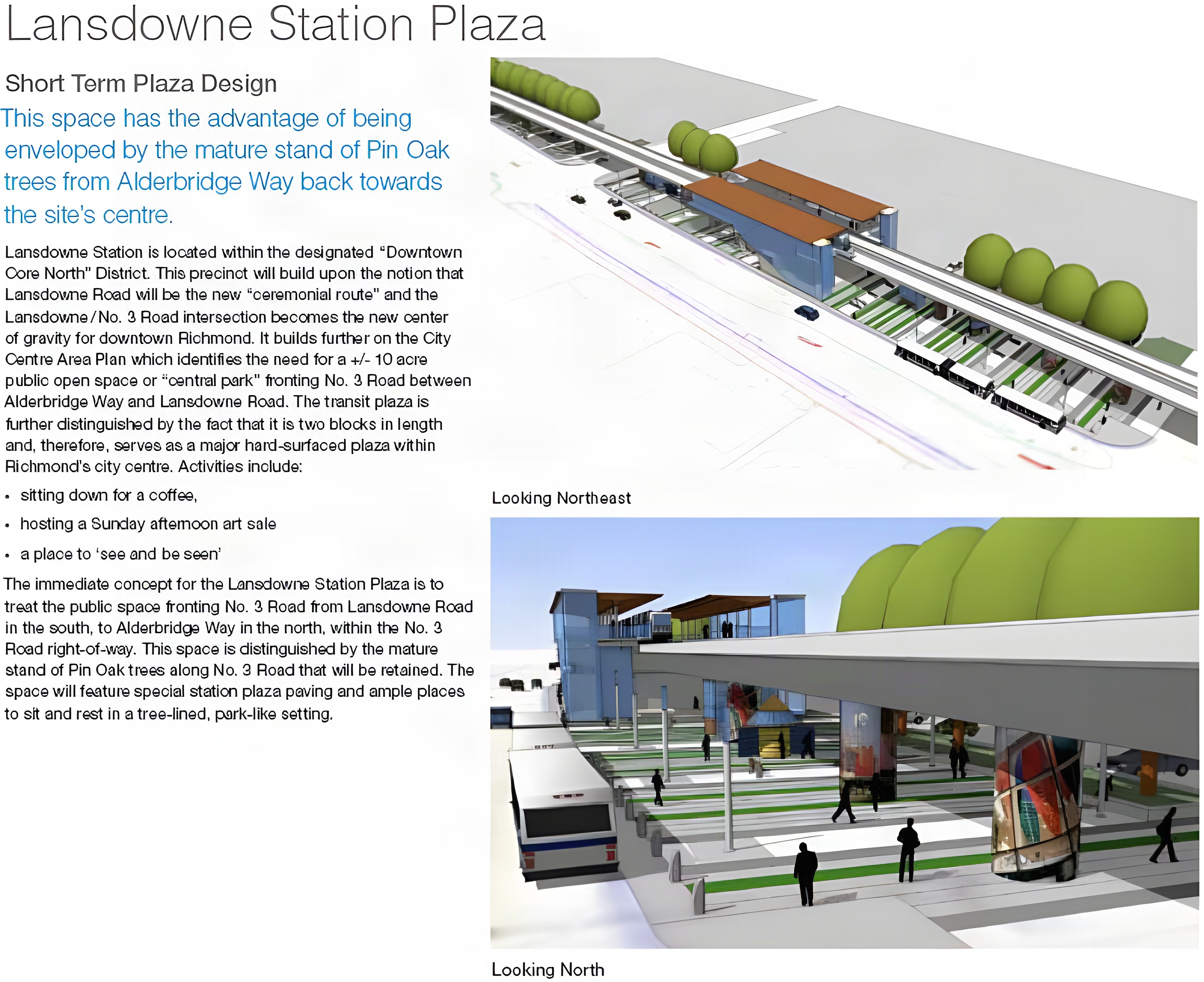

Lansdowne Station land use planning for Canada Line by City of Richmond
An example of a Canada Line integration plan

Where LRT and SkyTrain DO differ: ridership outcomes

While both technologies could support a range of building forms, Surrey’s projected ridership outcomes matter. Based on the Surrey Rapid Transit Study and regional experience:

    • SkyTrain’s higher ridership and reliability create stronger conditions for transit‑oriented development, but this does not mean towers are mandatory or inevitable. It simply means SkyTrain corridors offer more flexibility for the city to choose the scale of development it wants.

    • LRT’s lower projected ridership may limit its ability to attract significant development, even if zoning were changed. Developers respond to demand, foot traffic, and long‑term growth potential—all of which would be stronger around a fully grade‑separated system.

The idea that LRT “protects” neighbourhoods from towers is appealing but misleading. It suggests that choosing a lower-profile, at‑grade system will somehow limit development pressure. But in reality, LRT’s development potential will be defined by its likely lower ridership, and not by the technology’s aesthetic ability to “protect” neighbourhoods.

Surrey is growing rapidly and requires a transit system that supports long‑term mobility, reliability, and regional integration. Decisions about density should be made through community planning processes, not assumed to be predetermined by transit mode.

Pictured in header: High-density retail and residential area around Metrotown SkyTrain station, showing a mix of high-rise and mid-rise development

Debunking Myths

SkyTrain for Surrey is a BC-based community organization that has advocated for the expansion of the Vancouver SkyTrain system, including our successful advocacy for the under-construction Surrey Langley SkyTrain extension.

Media Contact: Daryl Dela Cruz ​– Founder, SkyTrain for Surrey ・ Phone: +1 604 329 3529, [email protected]

Debunking the Myth: “LRT Brings Mid‑Rises, SkyTrain Brings Towers”