SkyTrain for Surrey

City of Surrey’s LRT study ignores transportation outcome

We have found that the majority of the findings in a new City of Surrey-sponsored study are invalid—and cannot acceptably represent a positive business case for an LRT system. The report conducted by Shirocca Consulting and “independent economist” Teresa Watts claims that LRT will generate economic benefits that far exceed the costs. However, our initial analysis finds that there is a very wide gap between what this study is trying to push and what transit riders and commuters actually care about.

Three key flaws in Surrey's LRT study

1. It ignores the transportation outcome

It’s incredibly clear—including on the city’s summary web page—that this study avoids the transportation case, opting to focus on numerous vague indicators like how many workers get hired to build the line and how much is being paid to drivers and operations staff. Transit riders and commuters are not interested in these vague details—they want to know if they’ll be able to get around the city more easily.

2. It assumes that transit riders want to make more stops

The study attempts to suggest that Light Rail is the solution that “makes sense” for Surrey because it will have more stops than a SkyTrain extension on the same route. Transit riders don’t want to make more stops—they want to access more of our region in less time. That’s why rider surveys on recent SkyTrain expansions show that trip speed and quality of service were the #1 factor in attracting ridership.

3. It assumes that railway tracks are necessary to achieve infrastructure “permanence.”

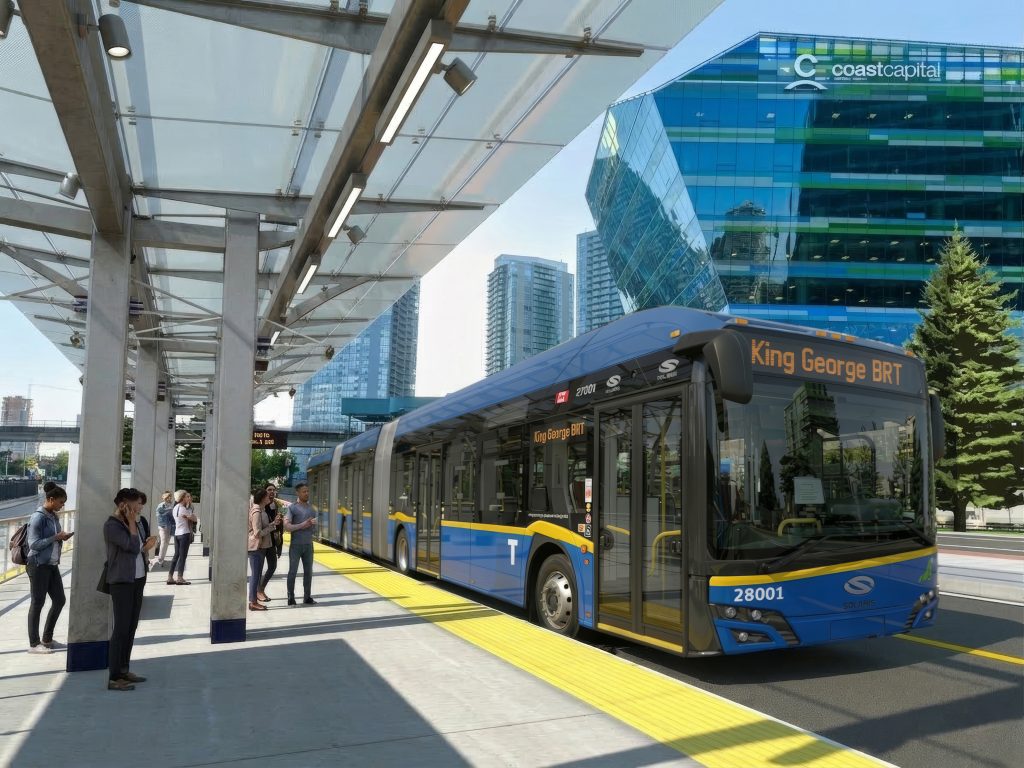
The study again perpetuates the suggestion that because Light Rail is a railway with tracks, it creates “permanence” and is more attractive. And yet Bus Rapid Transit, or BRT, can receive the same “permanence enhancements” such as branding, way-finding information, landscaping, sheltered stations/stops that have wait-time displays, off-board payment, and a dedicated right-of-way. Studies cited by professional transit consultants, such as renowned consultant Jarrett Walker, suggest that BRT actually attracts more development per dollar of investment.

SkyTrain's travel time benefits are understood by citizens

A SkyTrain extension would let Langley riders reach Waterfront Station in under 60 minutes, or every major regional centre within an hour and a half. An LRT on the same route would only allow commuters to reach Surrey or New Westminster within 1 hour.

It’s no wonder that the TransLink-led Surrey Rapid Transit Study found a negative business case for an LRT and that there is strong opposition to LRT in the Township of Langley.
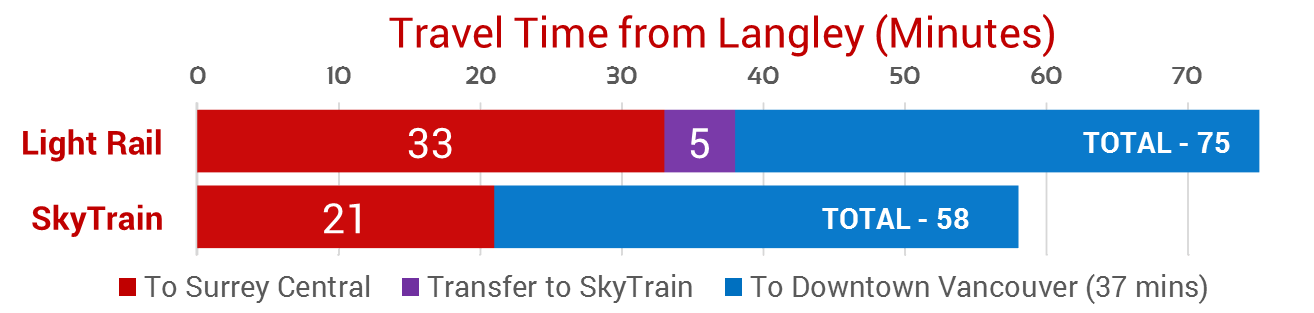

Travel time estimates for SkyTrain vs LRT on Fraser Highway

Footnotes

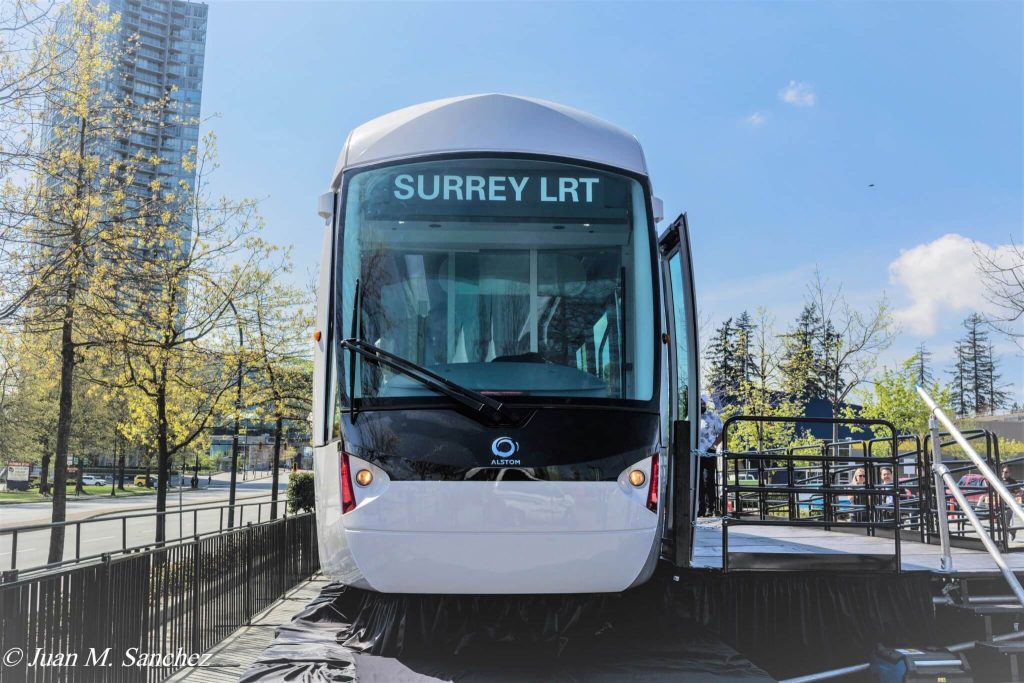
Pictured in header: Concept mock-up Surrey LRT vehicle

SkyTrain for Surrey is a BC-based community organization that has advocated for the expansion of the Vancouver SkyTrain system, including our successful advocacy for the under-construction Surrey Langley SkyTrain extension.

Media Contact: Daryl Dela Cruz ​– Founder, SkyTrain for Surrey ・ Phone: +1 604 329 3529, [email protected]

City of Surrey’s LRT study ignores transportation outcome