Audit proposes 25% SkyTrain capacity decrease for minimal savings

One of the things that the recent provincial audit on SkyTrain points out is that a reduction in SkyTrain operating frequency is likely to present a very minimal cost savings, against the bigger picture of cost savings.

The original proposal to reduce SkyTrain weekend frequency in the 2013 TransLink base plan would have generated a savings of just $470,000 annually, in a plan that involved $91 million in annual savings. The provincial review proposes that frequency reductions also be taken in the off-peak hours on weekdays. This would save some $1.1 million annually in addition, totalling just a $1.57 million savings in a plan that would combine the base plan savings and audit savings to save $139 million annually.

The Expo and Millennium Lines cost $26.3 million to operate annually in 2011. With inflation to 2012 dollars taken into account, this means that the proposed frequency reductions would generate just 5.9% in annual SkyTrain cost savings.

The provincial audit recommends that both weekday and weekend off-peak service frequencies are reduced to the pre-2002 levels.

The numbers point out a fact that is true about our SkyTrain system and the technology used in it: that the operating frequency has very little effect on the system’s operating cost thanks to a key benefit of the used technology: driver-less operation. The minimal cost savings that would be had out of decreasing the operating frequency could cost TransLink some off-peak choice riders, particularly in the winter when travellers would want to be on board a train and not outside in the cold.

The savings decided by a 1-2 minute frequency increase when SkyTrain runs in the off-peak hours are superficial in the big picture. The frequency and capacity decrease, at 25% for travellers on the Expo Line segment and Millennium Line (6 minutes to 8 minutes), moreso capacity-constrained sections of SkyTrain, will not be.

A choice ridership and resulting revenue decrease could easily combat these minimal savings.

The provincial audit of TransLink, which was demanded by B.C. Premier Christy Clark earlier this year, was released today and can be read by [CLICKING HERE].

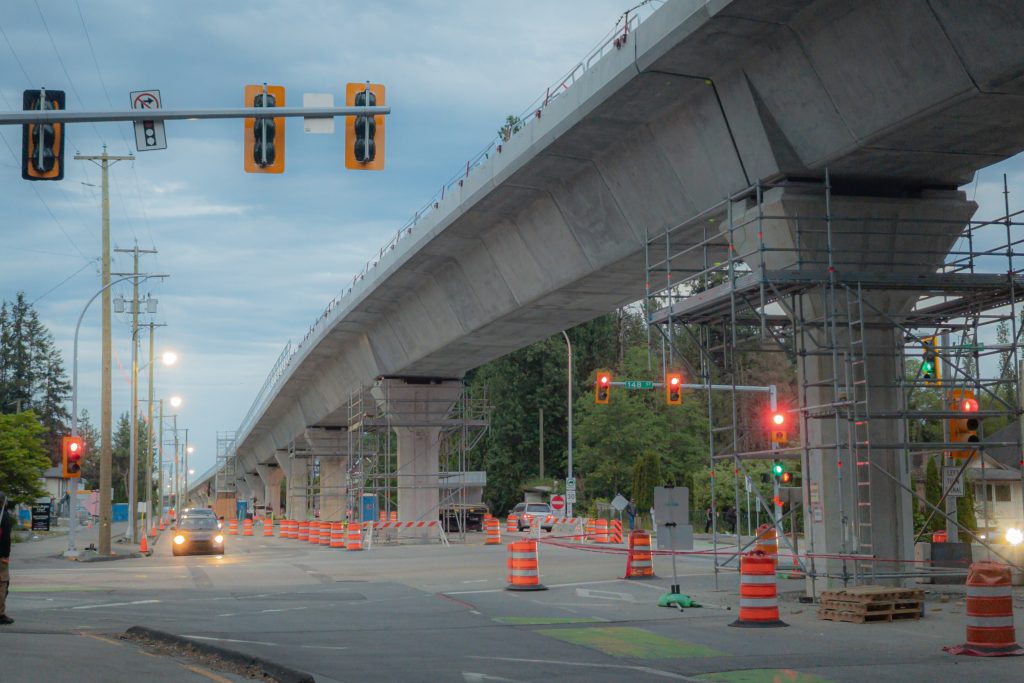
Observations of existing rapid transit implementations such as this one simply prove that SkyTrain costs less than what most people think! Based on this photo http://www.flickr.com/photos/sillygwailo/348736559/sizes/o/in/photostream/ licensed under the creative commons - attribution

The driver-less operation of SkyTrain results in low operating costs. In the past, SkyTrain ran high frequencies with smaller trains, providing a better level of service at lower operating cost – while most light rail systems elsewhere ran longer trains – though less frequently. These higher frequencies help keep SkyTrain’s ridership relatively high.

About these ads

Leave a Reply

Fill in your details below or click an icon to log in:

WordPress.com Logo

You are commenting using your WordPress.com account. Log Out / Change )

Twitter picture

You are commenting using your Twitter account. Log Out / Change )

Facebook photo

You are commenting using your Facebook account. Log Out / Change )

Connecting to %s

Follow

Get every new post delivered to your Inbox.

Join 428 other followers

%d bloggers like this: