SkyTrain for Surrey

New study shows Calgary’s C‑Train LRT fails to reduce car depenency

A recent study from the Frontier Centre for Public Policy[1][2] offers a detailed, data‑driven critique of Calgary’s Light Rail Transit (LRT) system, the C‑Train. Despite decades of investment and the system’s reputation for high ridership, the study finds that automobile dependency in Calgary has not meaningfully decreased. In fact, Calgary remains one of the most car‑oriented major cities in Canada.

The findings challenge several long‑standing assumptions about the C‑Train’s performance—particularly claims of cost‑effectiveness and its ability to shift commuters out of cars. Similar research from cities such as Portland, Oregon reinforces these conclusions, suggesting that the limitations observed in Calgary are not unique, but are characteristic of many North American at‑grade LRT systems.

Why Calgary’s Case Matters

Calgary’s experience is especially relevant to Canadian transit discussions because:

    • It is a major Canadian city with a long‑established rapid transit system.
    • Its LRT began operating around the same time Vancouver launched SkyTrain.
    • It is frequently cited as North America’s “most successful” LRT, with the highest boarding counts on the continent.

These factors make Calgary a common reference point in debates about transit technology—yet the study shows that high boardings alone do not necessarily indicate a competitive or effective system.

Point #1: High ridership driven by parking policy, not system performance

The study highlights a key dynamic: that Calgary’s high LRT ridership is largely a product of downtown parking policies, rather than the inherent competitiveness or service quality of the C‑Train.

Per the study, Calgary has:

    • The highest downtown-area parking costs in Canada
    • A significant shortage of parking spaces
    • A larger share of workers commuting to the central business district than other Canadian cities.

With daily parking reaching $22 or more, driving downtown becomes prohibitively expensive for many commuters. At the same time, Calgary now offers free park‑and‑ride facilities along LRT corridors, making the C‑Train the cheaper option for those who must reach the core.

These conditions help explain the roughly 270,000 daily boardings (2007)—but they also reveal a critical weakness. Despite the C-Train and even with these strong incentives, Calgary still has the highest percentage of downtown drivers of any major Canadian city. This suggests that the C‑Train is not attracting choice riders; rather, many riders are using it because driving has been made deliberately difficult or costly.

Two false premises are the basis of the new Calgary stereotype. First, it assumes that the CTrain is cost-effective. Second, it assumes that the C-Train is actually getting people out of their cars—it is not. Despite the City’s Draconian efforts to curb downtown parking, more people drive down-town than in any other Canadian city.

Point #2: LRT savings offset by higher spending on roads, higher operating costs

As an at‑grade LRT system, the C‑Train faces inherent performance constraints. Its average operating speed of 35 km/h is typical for surface LRT, but significantly slower than grade‑separated rapid transit (our SkyTrain, by comparison, averages closer to 45 km/h including stops). Meanwhile, Calgary’s extensive road network—including major investments like the Stoney Trail bypass—makes driving fast, direct, and convenient.

As a result, Calgary spends more money per capita on roads than any other city in Canada[3][4][5]. Combined expenditures on both transit and roads per capita are a full 25% higher than the next closest rival Edmonton (also a city in Alberta with an at-grade LRT system).

The study also compared transit infrastructure and operations costs and found that, on a per-capita basis, Calgary actually spends more building and maintaining its LRT system than Vancouver spends on SkyTrain. This result comes out when capital, operating, and maintenance costs are compared together—reinforcing our belief that capital cost savings from building at-grade LRT infrastructure are ultimately made up for by higher operations costs with each train having a driver.[6]
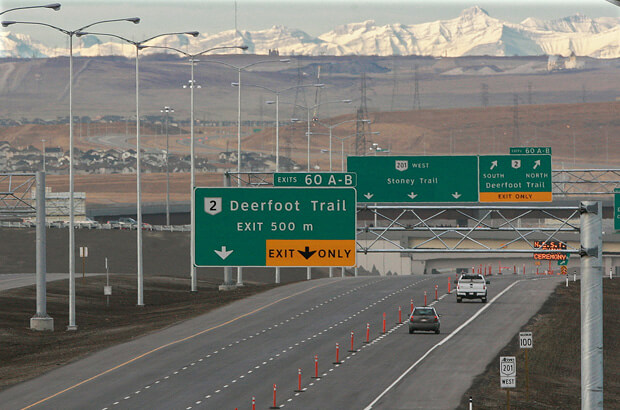

Calgary Stoney Trail Expressway
The Stoney Trail expressway was one of Calgary’s most recent heavy road expenditures.

Point #3: Network design challenges and missed opportunities

The study also notes that Calgary’s bus network functions primarily as a feeder system to the C‑Train. This means:

    • Many bus riders are simply transferring to LRT, not generating additional revenue ridership
    • Investment in LRT construction and operations has constrained funding for a strong crosstown bus network
    • The overall transit network lacks the connectivity needed to attract riders who are not travelling to the downtown core

Another recent study[7] pointed out that in Calgary, transit mode share remains below 17% despite so called “high ridership” on LRT—while more than 75% of commuters travel by car. In addition, median commuting distances are longer than in other Canadian cities, and fewer trips fall within short, transit‑friendly ranges[8]—further reinforcing the appeal of point‑to‑point driving.

A more competitive system—one with faster service, lower station density, and stronger city‑wide bus integration—could have attracted more choice riders. Instead, Calgary’s reliance on at‑grade LRT has limited the system’s ability to provide fast, reliable, region‑wide mobility.

A cautionary example for Greater Vancouver and other cities

The study concludes that Calgary’s LRT implementation should not be viewed as a model for other growing cities—particularly those, like Surrey, seeking long‑term, competitive rapid transit solutions. When a transit system relies heavily on restrictive policies rather than strong performance, it struggles to deliver meaningful mode‑shift or broad mobility benefits.

For cities facing similar growth pressures, grade‑separated rapid transit—such as Metro Vancouver’s SkyTrain—offers a more competitive, scalable, and future‑proof alternative.

Footnotes

  1. Media Release – The 30th Anniversary of the C-Train: A Critical Analysis of Calgary’s Light Rail Transit System — Frontier Centre for Public Policy (FCPP) — March 2011[]
  2. The 30th Anniversary of the C-Train: A Critical Analysis of Calgary’s Light Rail Transit System by Steve LaFleur (PDF) — Frontier Centre for Public Policy (FCPP) — March 2011[]
  3. FCPP study, p.10[]
  4. Urban Transportation Indicators, Fourth Survey — Transportation Association of Canada (TAC) — May 2010 (*cited by FCPP)[]
  5. TAC data —Exhibit 9.2, p.67[]
  6. TAC data —Exhibit 9.7, p.71[]
  7. Benchmarking Active Transportation in Canadian Cities — Toronto Coalition for Active Transportation (TCAT) and Clean Air Partnership — Figure 4.13, p.31[]
  8. TCAT study — Figure 4.16, p.43[]

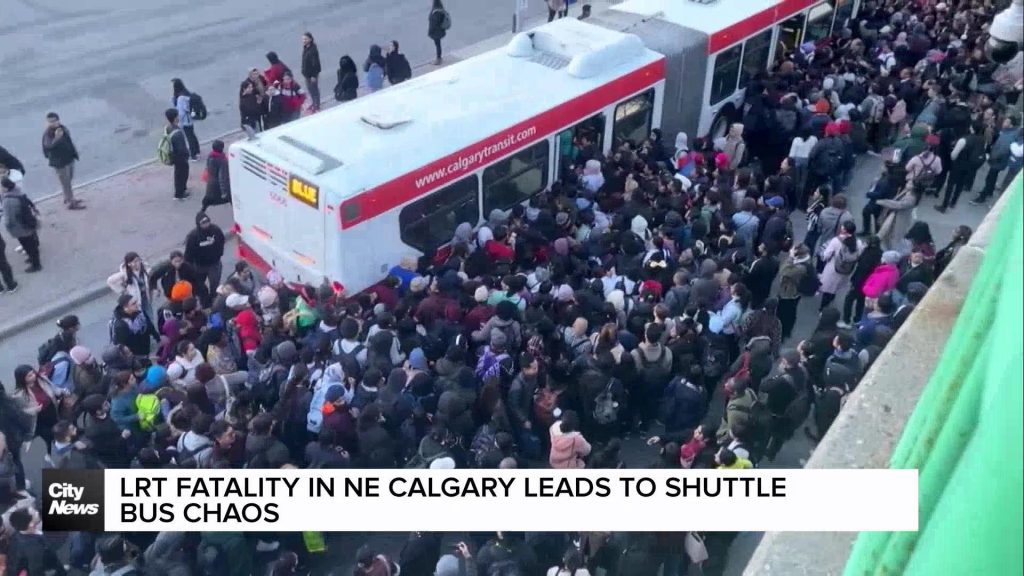
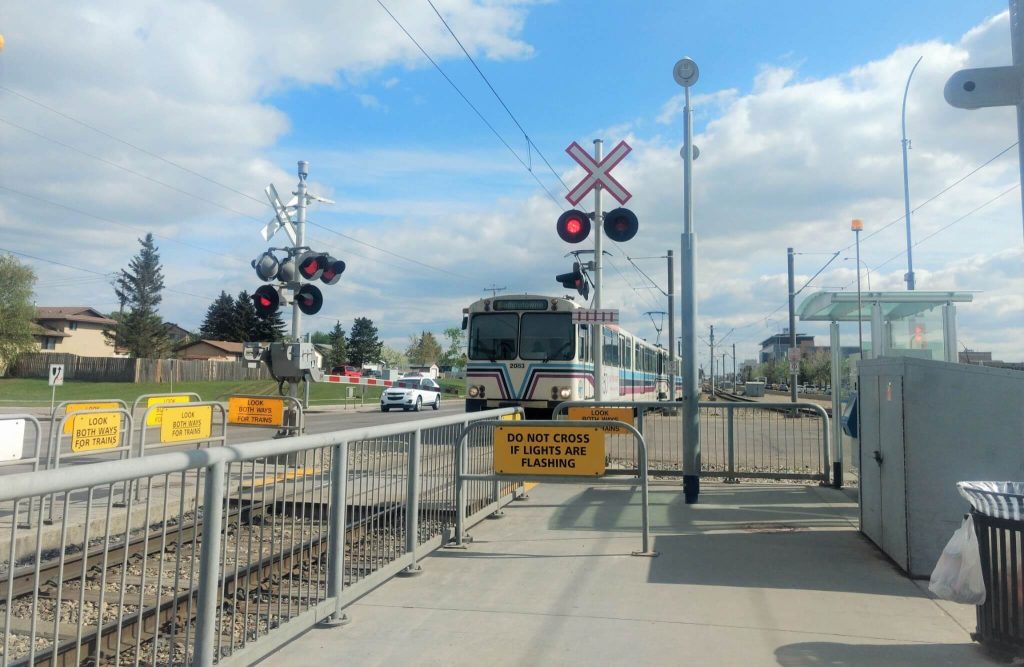
Pictured in header: Calgary C-Train LRT on 7th Avenue at-grade in downtown

Reality Check

Reality Check is the online blog run by the founder of SkyTrain for Surrey, a BC-based community organization that has advocated for the expansion of the Vancouer SkyTrain system, including our successful advocacy for the under-construction Surrey Langley SkyTrain extension.

Media Contact: Daryl Dela Cruz ​– Founder, SkyTrain for Surrey ・ Phone: +1 604 329 3529, [email protected]

New study shows Calgary’s C‑Train LRT fails to reduce car depenency