 Daryl DC (SfS Founder)
A total shut down of the Confederation Line LRT in Ottawa has now entered its fifth consecutive week with no end in sight, after a derailment that caused significant track damage triggered an investigation by the city’s Auditor General.
Transit riders are agitated and angry: I have heard extensively from contacts and friends in Ottawa about the protests at City Hall[1], the severe overcrowding on alternative bus services[2], and the LRT system’s long history of operational and reliability issues.[3] But, could Ottawa have avoided all of these issues if it went in a different direction and built a SkyTrain-style system instead???
Transit riders might be surprised to know that in 2009, a SkyTrain-style driverless light metro using high-floor vehicles was being seriously considered by their City Council. Furthermore, if Ottawa had proceeded with such a system, it would have likely incorporated technologies we use in our SkyTrain system (such as linear induction motors).
In an “LRT Technology Forum” which the City of Ottawa held in June 2009, Vancouver was among several cities that had sent a delegation to present to Ottawans, and Bombardier (the majority supplier of our SkyTrain vehicles) was also a presenter. Unfortunately, at the end of this period of deliberating technologies, Ottawa’s City Council ultimately decided to reject a SkyTrain-type system, and mandated in a November 2009 motion that only light rail transit (LRT) be considered for the city’s rail rapid transit network.
While City Council cited a number of practical considerations and a high-level study in reaching this decision, it effectively barred the consideration of anything other than LRT technology for future rail rapid transit in the City of Ottawa—even in cases where a light metro (SkyTrain-style) system would have been more practical, such as in the inner city.
Although they became the chosen supplier for the rolling stock on Ottawa’s light rail system, Alstom had actually recommended—during the June 2009 forum—that the city pursue a light metro system, and not an LRT system.
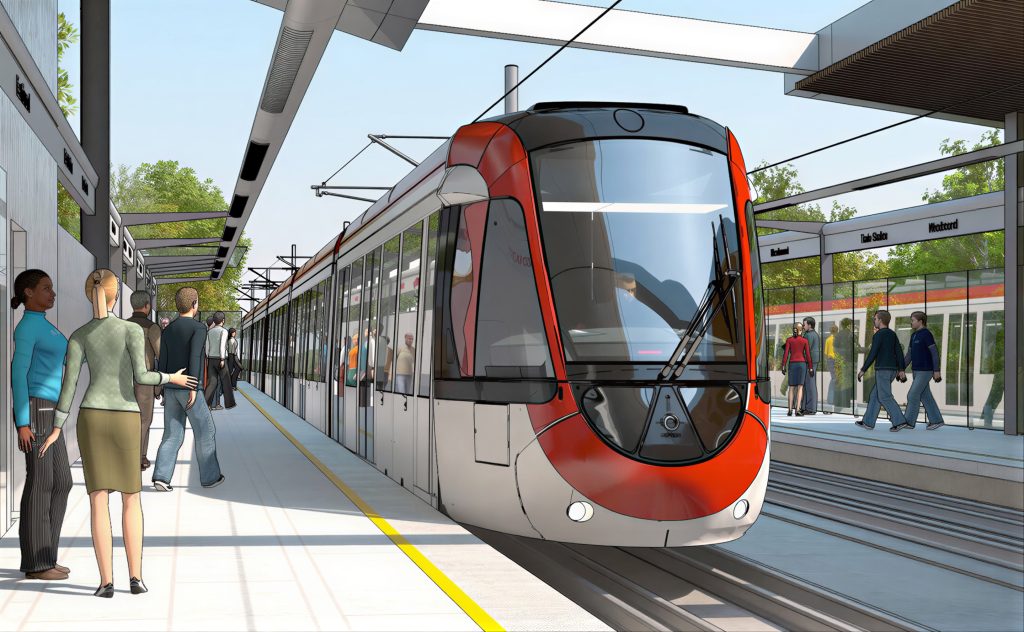
Since then, the Confederation Line LRT’s Alstom-built low-floor vehicles have faced several technical issues that would have been avoided if the city had chosen to build a light metro, SkyTrain-style system using SkyTrain’s technologies.
As an example, the doors on Alstom’s light rail vehicles are not designed to be held open (as is commonly done on our SkyTrain system when someone wants to board a train last-minute). This has meant that door jams have become a significant cause for delay.
Ottawa City Council’s 2009 motion, while perhaps good in intention, has exposed a flawed decision-making process. I am interested in how it was very similar to the motions and decisions made by previous City Councils in Surrey to reject all SkyTrain extension proposals, and only consider surface-running LRT in our city’s rapid transit network.
If Surrey City Council had proceeded with a street-running surface LRT on King George Boulevard and 104 Avenue, this system—crossing roads and paths at-grade—would have been prone to accidents and blockages, and potentially see a lot of time either disrupted or out of service, just as the Ottawa Confederation Line does today due to its operational issues.
Now that rapid transit is being considered by TransLink on these corridors again and SkyTrain is an option on King George Boulevard, it’s important that we see the lessons learned by Canada’s capital city as we plan for our own future rapid transit system.
Pictured in header: “FIX THE LRT” sign from a protest in Ottawa on LRT reliability issues
Reality Check
Reality Check is the online blog run by the founder of SkyTrain for Surrey, a BC-based community organization that has advocated for the expansion of the Vancouer SkyTrain system, including our successful advocacy for the under-construction Surrey-Langley SkyTrain extension.
Media Contact: Daryl Dela Cruz – Founder, SkyTrain for Surrey ・ Phone: +1 604 329 3529, [email protected]