
Building a light rail system instead of extending the existing SkyTrain would mean starting from scratch, which would incur a large capital cost to initiate the new system. A location will also need to be scouted for the construction of a new storage yard and maintenance facilities. The system will also require the use of different rolling stock, necessitating the need to train or employ qualified personnel to work with it.
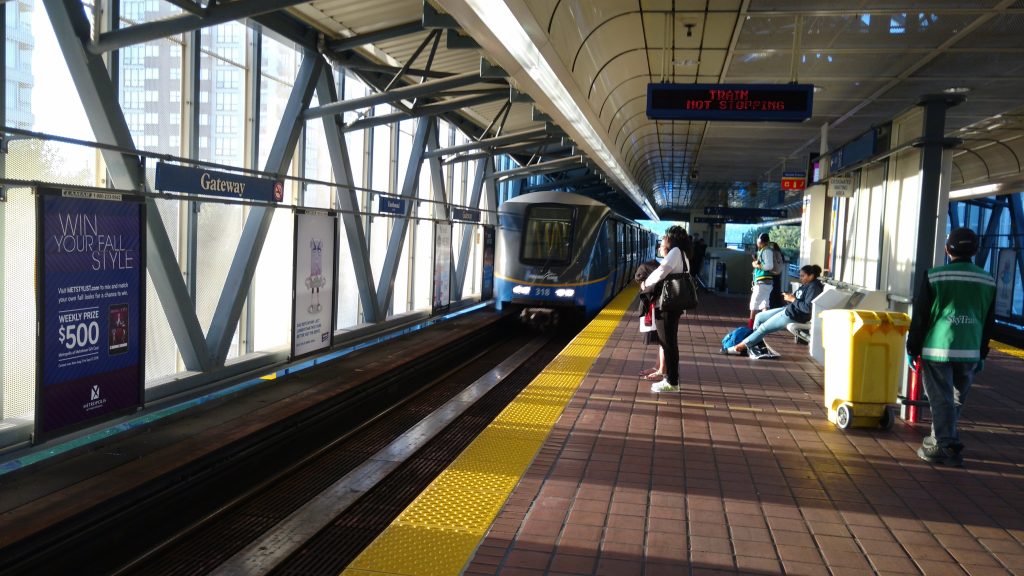
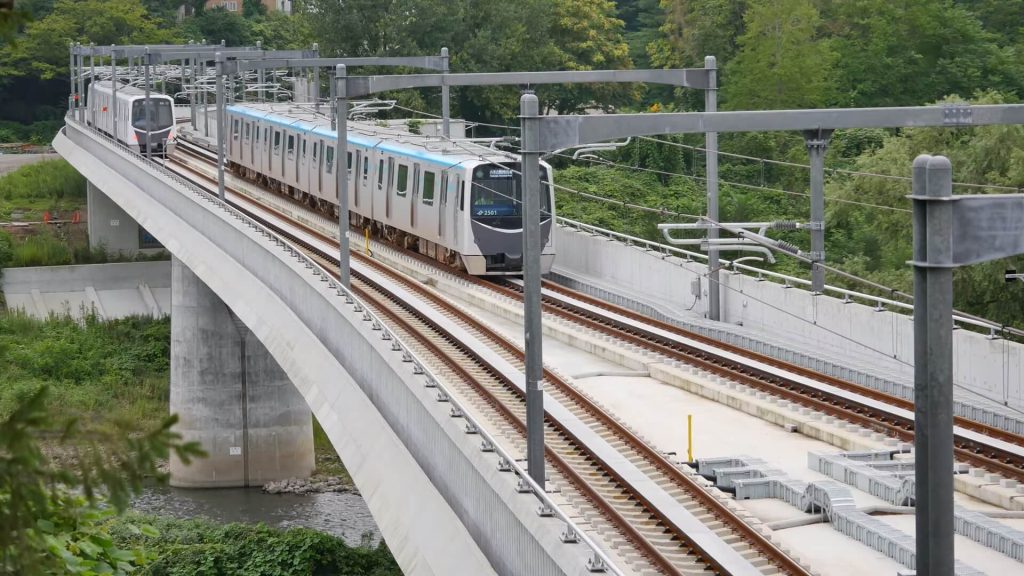
By comparison, expansion of the SkyTrain RRT (rapid rail transit) system does not require these additional and large capital costs. Although new trains would have to be ordered, these trains could potentially be maintained and controlled from the SkyTrain maintenance centre in Burnaby.
Furthermore, the addition of trains will only minimally impact or increase the SkyTrain system’s operating cost. The system’s operating cost per vehicle kilometre in 2010 was actually the lowest in the past five years, even though 48 new Mk. II SkyTrain vehicles had been added to service that year.[1]
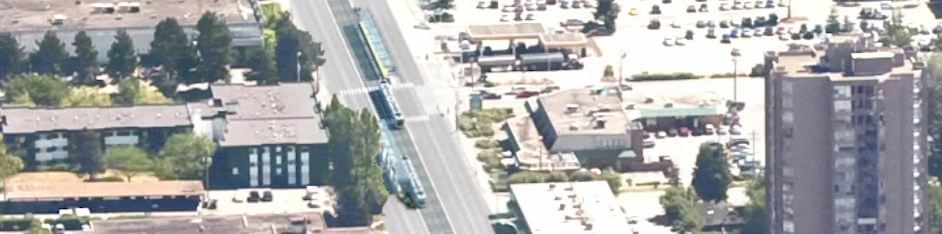
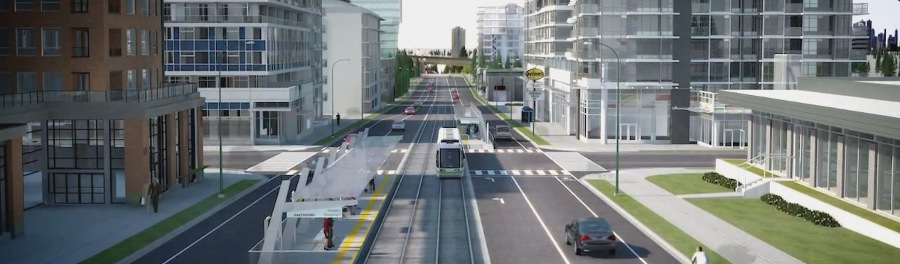
Surrey’s LRT tracks are planned to run in the middle of the road, meaning an accident along the light rail corridor would be catastrophic. Unlike buses, light rail trains are not able to maneuver around the accident or choose alternative roads to travel on.
One accident at an intersection, whether the accident actually involves a train or not, could shut down both tracks of the system and the entire service for several hours, wreaking havoc on everyone’s commutes.
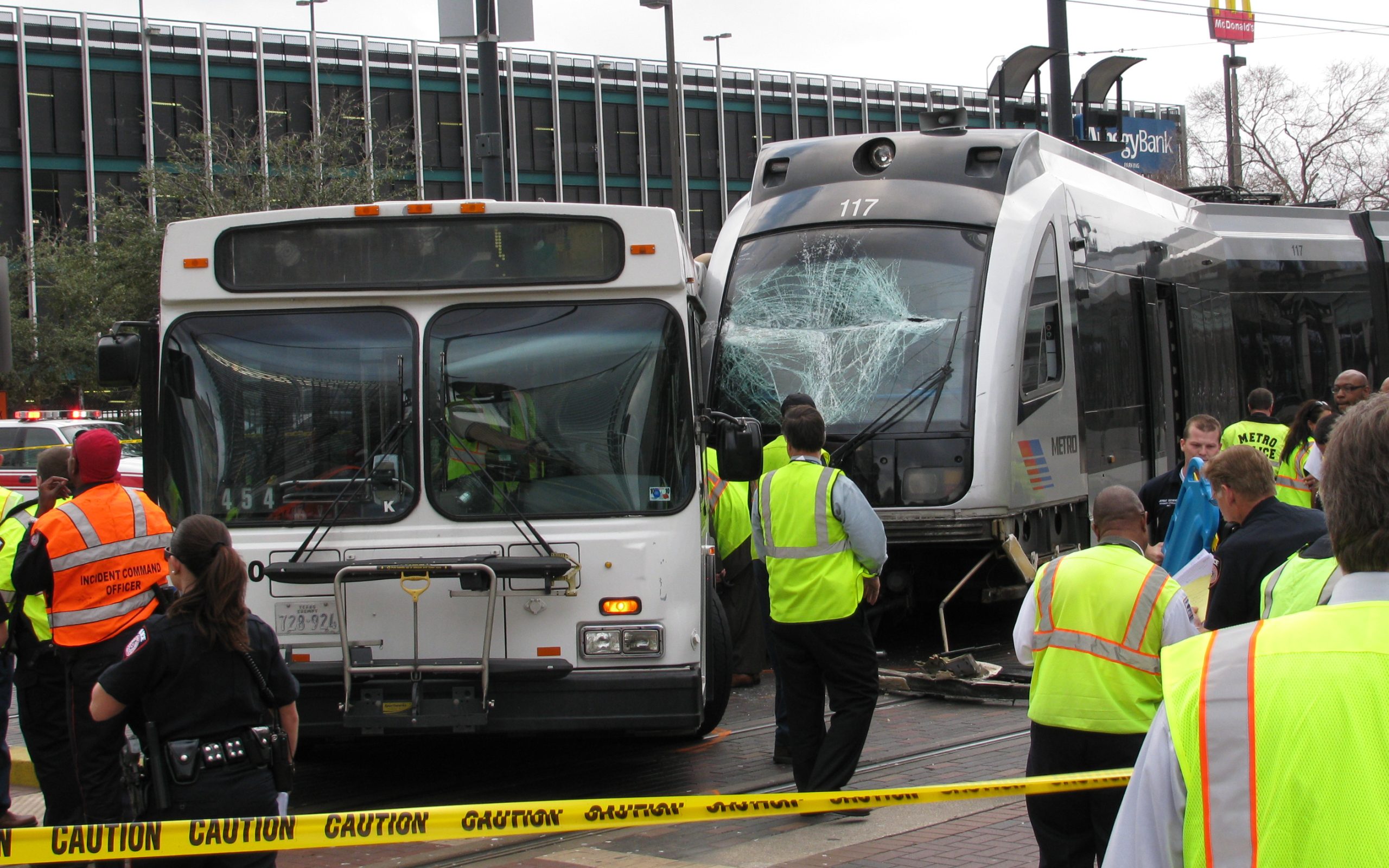
This could be particularly devastating to the system’s reliability. Right now, Twitter feeds of Metro Vancouver traffic news reporters (i.e. News1130, AM730) constantly report accidents, several of which take place on the corridors being studied for rapid transit.
Vehicular accidents at ground level do not put the elevated SkyTrain RRT system at risk of a service disruption at all. The SkyTrain system has consistently recorded above 94% on-time service reliability for the past 5 years[4].
On light rail systems, communication between trains is limited to sight line and radio, meaning that a minimum safe distance must be kept between trains. This not only limits the maximum possible frequency of the service, but it may also limit future expansion of the line’s capacity.
And, once the line’s capacity has been reached, the only way to increase capacity on the line would be to use larger and/or longer train sets. If this is feasible at all, then cash-costly and space-costly platform extensions, as well as additional street reconstruction, would be required to accommodate the longer trains.
But, if this has not been accounted for in the initial designs and/or is not possible, the LRT line may have to be replaced with a SkyTrain line in the future in order to cope with increasing demand, and this would have to be done at a higher cost at that time.
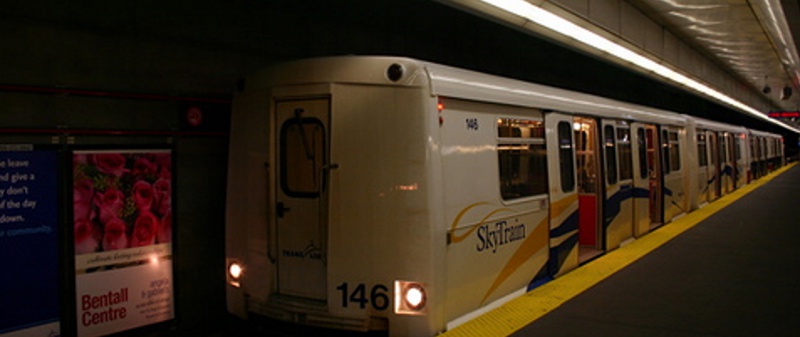
TransLink also ensures that the SkyTrain system offers an excellent and frequent off-peak service, in addition to the very frequent peak-hour service. Thanks to automation, this can be done for no additional operating cost; whereas light rail’s driver requirement results in a more costly off-peak service when trains are less utilized, meaning that off-peak frequencies are usually lower.
As an example, Calgary’s C-Train LRT operates with an off-peak frequency during weekdays of only every 10-15 minutes[6]; by comparison, Vancouver’s Expo and Millennium SkyTrain lines operate every 6-8 minutes on their respective split alignments during late-night hours, with interlined service between Waterfront and Columbia stations operating every 3-4 minutes.
For travellers to and from Langley Township, light rail running in the middle of Fraser Highway would be subject to its speed disadvantage. Right now, existing trends show that many South-of-Fraser travellers choose to drive instead of taking transit because of the travel time savings.
Assuming light rail would operate at a theoretical average speed of 34.1 km/h, including stops (the same average speed as Portland’s MAX light rail in 2010[2]), it would be faster for many people to utilize the proposed RapidBus that will link Langley Centre to Surrey Central via Walnut Grove and Highway 1, especially if they park-and-ride. It would also remain faster to drive the entire commute.
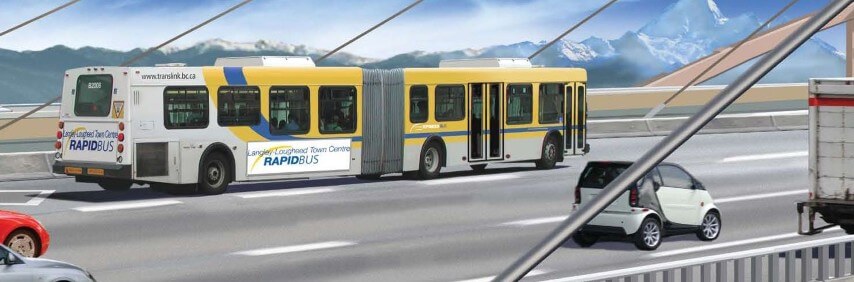
On 104 Avenue between Surrey Central and Guildford, concepts shown by the city of Surrey have shown that general traffic lanes will be removed for light rail transit. This may add so much congestion that regular transit buses like the 320 and 501 would be unable to provide parallel local service; this reduces overall transit capacity on the corridor, through the elimination of parallel local bus service.
That parallel service may have to be rerouted down undesigned side streets not designed for higher speed bus operations, making local bus trips take longer and forcing passengers to walk further to their destination.