Canada Line survey shows what transit riders actually want
Reality Check
Daryl DC (SfS Founder)
February 16, 2012
A TransLink-commissioned 2010 study about the then-new Canada Line shows that transit riders who switched from driving to taking the SkyTrain valued speed, frequency and reliability the most out of a bucket list of other factors.
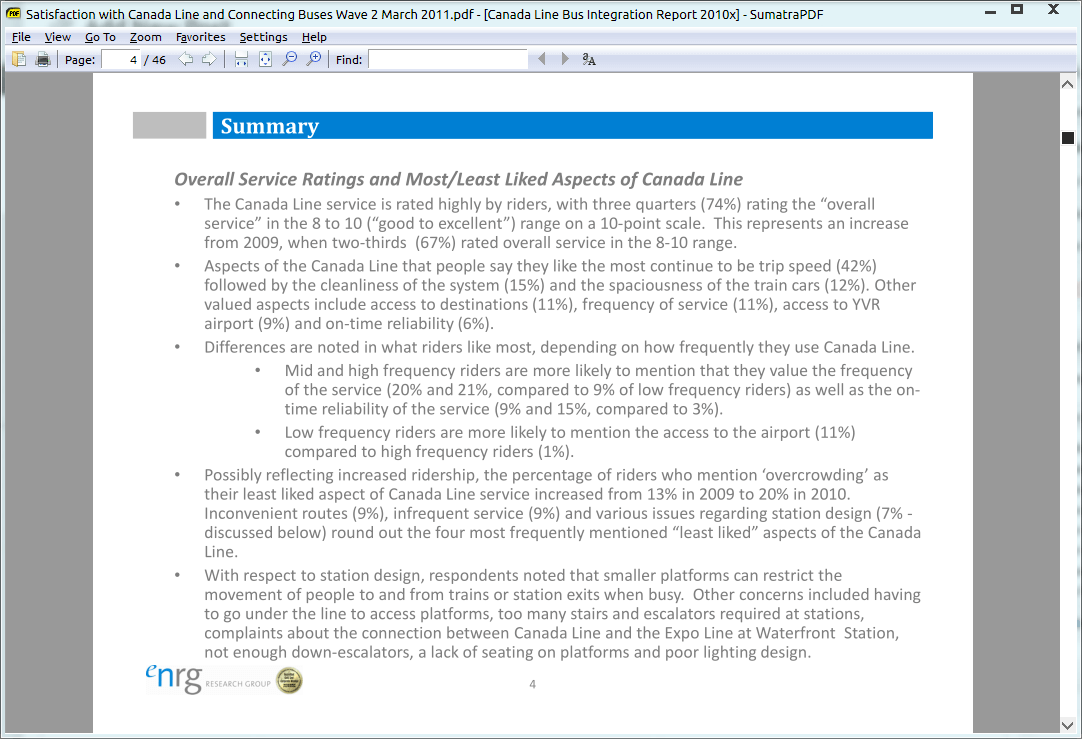
In the survey, the “trip speed” on the Canada Line continues to be its most liked aspect—mentioned by more than four-in-ten riders (42%), more than double the second most liked aspect (which was the “cleanliness of the system”), in the 2010 surey period[1]. Mid and high frequency riders in particular also valued the frequency and on-time reliability of the service more than other factors.
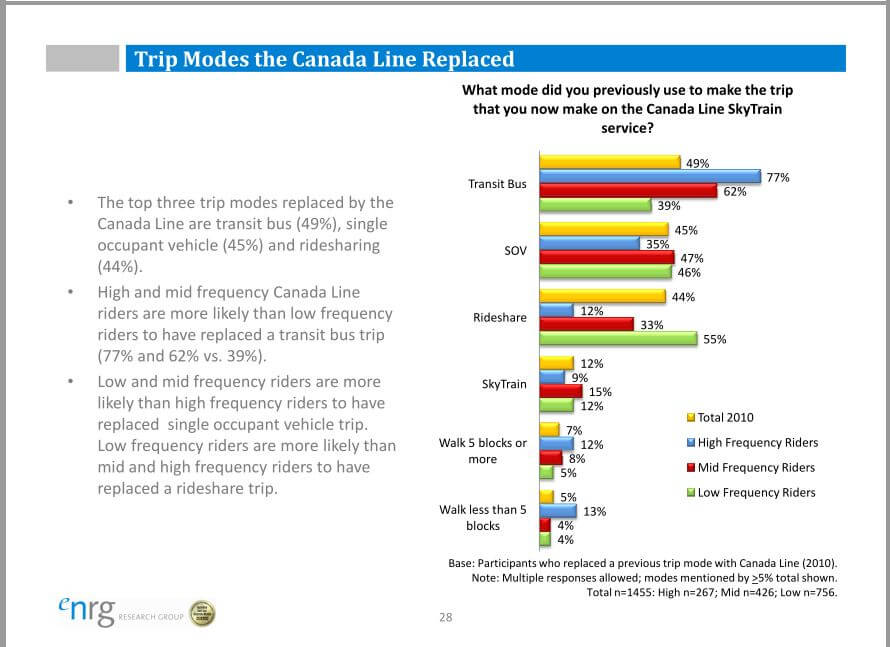
The Canada Line has been incredibly successful in attracting car drivers; a substantial amount of those surveyed (45%) reported that they were either single-occupant-vehicle (SOV) drivers or rideshare users before switching their trip to the Canada Line, including 35% of high-frequency riders. Without a doubt, the reduction in car use is taking several tonnes of greenhouse gas emissions out of the environment.
The speed of the trip continues to be a “most liked” aspect of Canada Line service. This was mentioned by more than four-in-ten riders (42%).
A substantial portion of Canada Line riders were at one point drivers of single-occupancy vehicles.
Overall, the majority of riders have given the Canada Line a positive rating, and the vast majority of riders (over 75%) report that their most frequent trip experience has become better as a result of the Canada Line—a hallmark of the fact that SkyTrain works.[2]
Elevated station design not considered an issue by most riders
Overcrowding continues to be the least-liked aspect (voted on by 20% of respondents), a definite result of the line surpassing its ridership projections. Meanwhile, issues with station design ranked lower—with only 7% rating this as their least-liked aspect, the fourth ranking item, and a considerable drop from the previous survey year in 2009.[3]
This category is important because it includes those who are disgruntled about the stairs, escalators and elevators needed to access elevated and underground platforms. Light rail advocates often point to this as a weakness of building SkyTrain, but the study shows that transit riders don’t actually consider this to be that important of a factor.
The Canada Line shows what actually matters for rapid transit planning
The ability to move many people quickly and reliably forms one of the fundamentals of rapid transit. Making a transit line fast, reliable and convenient attracts more people to choose to ride it.
Although the Canada Line—when compared to the Expo and Millennium Lines—has a comparably slower average speed of 35km/h (the Expo and Millennium Lines maintain 44km/h), its ability to whisk you from either Richmond City Centre or Vancouver International Airport to Downtown in just 25 minutes is unmatched by driving, due to there being no freeways on the road network in Vancouver.
And, as a result of the Canada Line’s fully grade-separated right-of-way, major service disruptions are rare—the Canada Line is as reliable as taking the existing SkyTrain, which provides well over 90% of its service on time.
Footnotes
“Aspects of the Canada Line that people say they like the most continue to be trip speed (42%) followed by the cleanliness of the system (15%) and the spaciousness of the train cars (12%). Other valued aspects include access to destinations (11%), frequency of service (11%), access to YVR airport (9%) and on-time reliability (6%).” — study p.4[↩]
“The Canada Line service is rated highly by riders, with three quarters (74%) rating the “overall service” in the 8 to 10 (“good to excellent”) range on a 10-point scale.” — study p.4[↩]
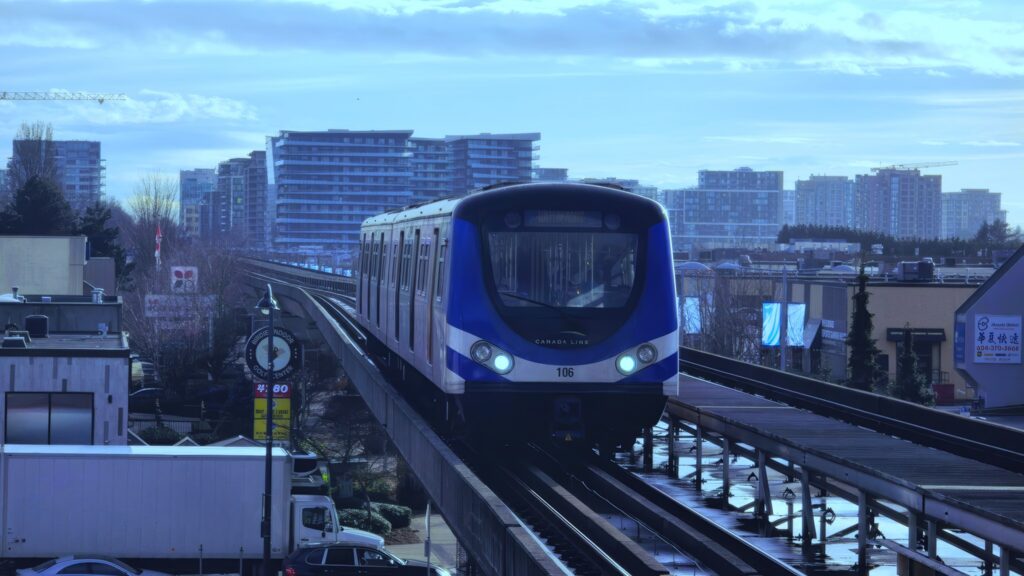
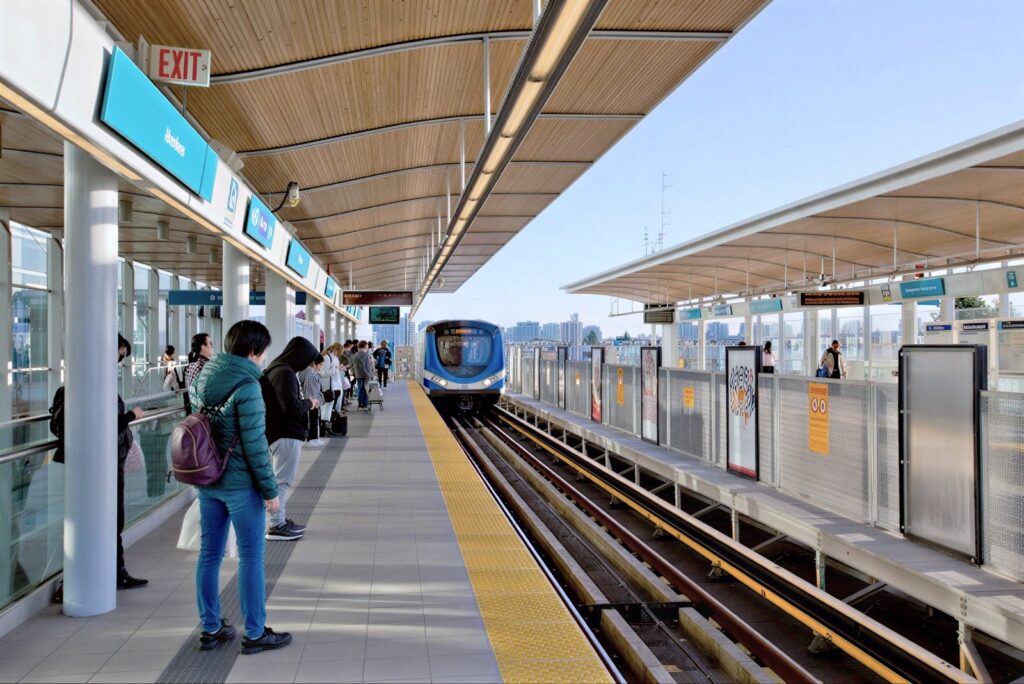
Pictured in header: A Canada Line train on an elevated guideway near YVR-Airport Station.
Reality Check
Reality Check is the online blog run by the founder of SkyTrain for Surrey, a BC-based community organization that has advocated for the expansion of the Vancouer SkyTrain system, including our successful advocacy for the under-construction Surrey Langley SkyTrain extension.
Media Contact: Daryl Dela Cruz – Founder, SkyTrain for Surrey ・ Phone: +1 604 329 3529, [email protected]