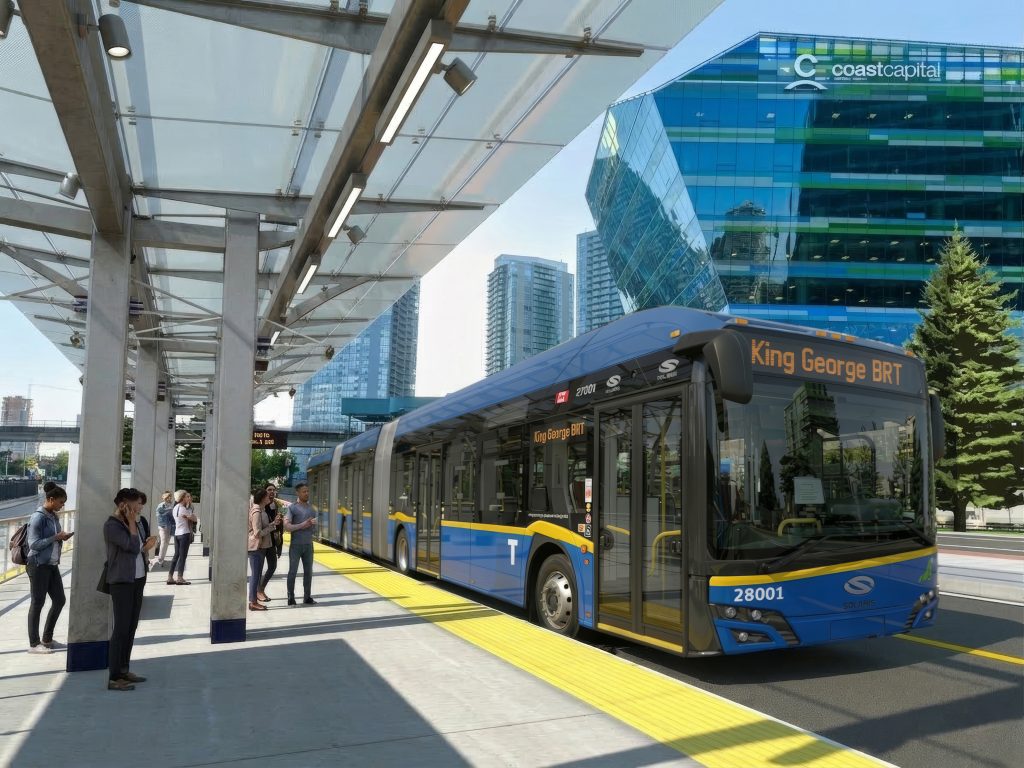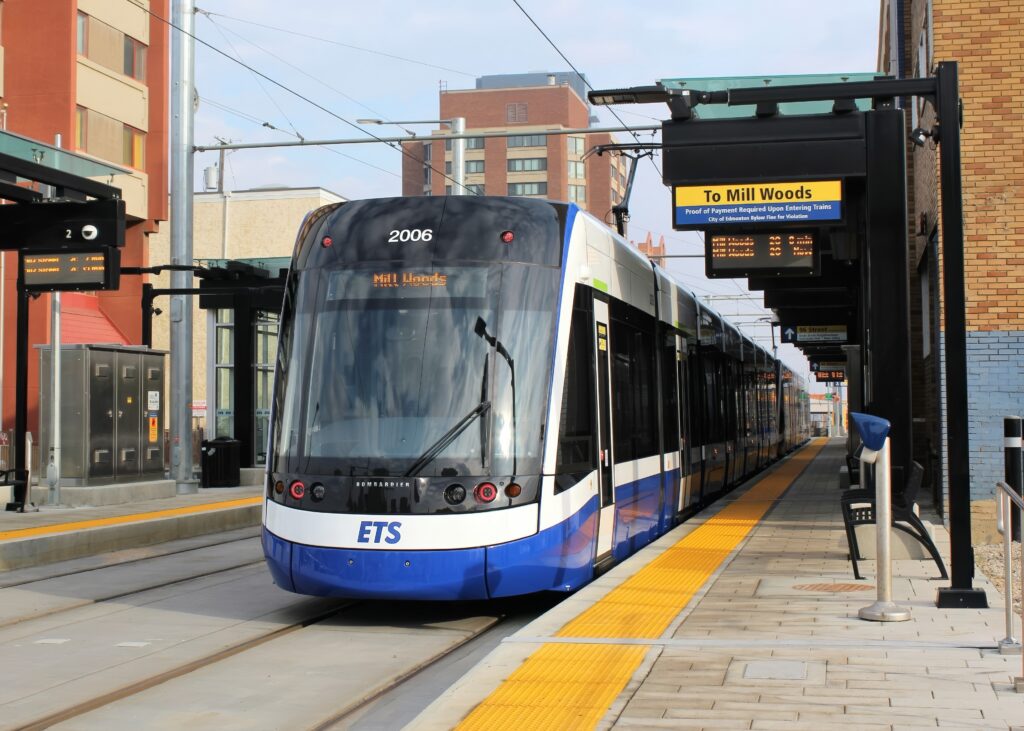
A recent commenter pointed us to Ottawa’s Transit Technology Choice Report and its recommendation of Light Rail Transit (LRT) over automated guideway systems like Vancouver’s SkyTrain. I dug into the report because the conclusions struck me as one‑sided, and after reviewing all of the assumptions and numbers, it’s clear the report understates what automated, grade‑separated systems like SkyTrain can deliver—and it overlooks important cost and engineering trade‑offs that matter when comparing technologies fairly.
The report lists mode capacities for three transit technologies: traditional subway, light rail transit (LRT), and automated light metro (SkyTrain). Although it acknowledges that both subways and SkyTrain-style light metro ultimately do provide a greater capacity than LRT[1], it lists SkyTrain as operating “at-capacity” due to short platform lengths[2], with a maximum capacity of 15,000 passengers per hour per direction (pphpd) on all three lines (the Canada, MIllennium and Expo Lines).[3]
Our commenter pointed out that Edmonton’s LRT is also shown at 15,000 pphpd, and Calgary’s LRT is shown at an even higher theoretical ceiling of between 19,440 and 30,270 pphpd. That framing has been repeated by critics as proof that LRT “moves more people” than SkyTrain.
However, this is misleading for three reasons:
There are three practical advantages that the report largely ignores:
Taken together, these factors mean that a fair comparison must look beyond headline pphpd numbers and consider how technology choices interact with route geometry, tunnelling needs, and long‑term operating costs.
Technology specifics matter, but this report treats modes as monolithic categories rather than engineering toolkits. Linear induction motors, automated control, and full grade separation are not just features—they change how you design tunnels, stations, and service patterns. Those changes affect both capacity and cost. And, by treating transit modes as rigid categories rather than flexible engineering toolkits, Ottawa risks locking itself into a sub-optimal solution.
Cities deciding between LRT and automated rapid transit deserve a transparent, engineering‑driven comparison. Only then can elected officials and the public make an informed decision about the transit system—before billions are committed to the wrong tracks.
Pictured in header: Early concept render of the Ottawa LRT Confederation Line
Reality Check
Reality Check is the online blog run by the founder of SkyTrain for Surrey, a BC-based community organization that has advocated for the expansion of the Vancouver SkyTrain system, including our successful advocacy for the under-construction Surrey-Langley SkyTrain extension.
Media Contact: Daryl Dela Cruz – Founder, SkyTrain for Surrey ・ Phone: +1 604 329 3529, [email protected]
We use cookies to improve your experience on our site. By using our site, you consent to cookies.
Manage your cookie preferences below:
Essential cookies enable basic functions and are necessary for the proper function of the website.
Statistics cookies collect information anonymously. This information helps us understand how visitors use our website.
Google Analytics is a powerful tool that tracks and analyzes website traffic for informed marketing decisions.
Service URL: policies.google.com (opens in a new window)
You can find more information in our Cookie Policy and .