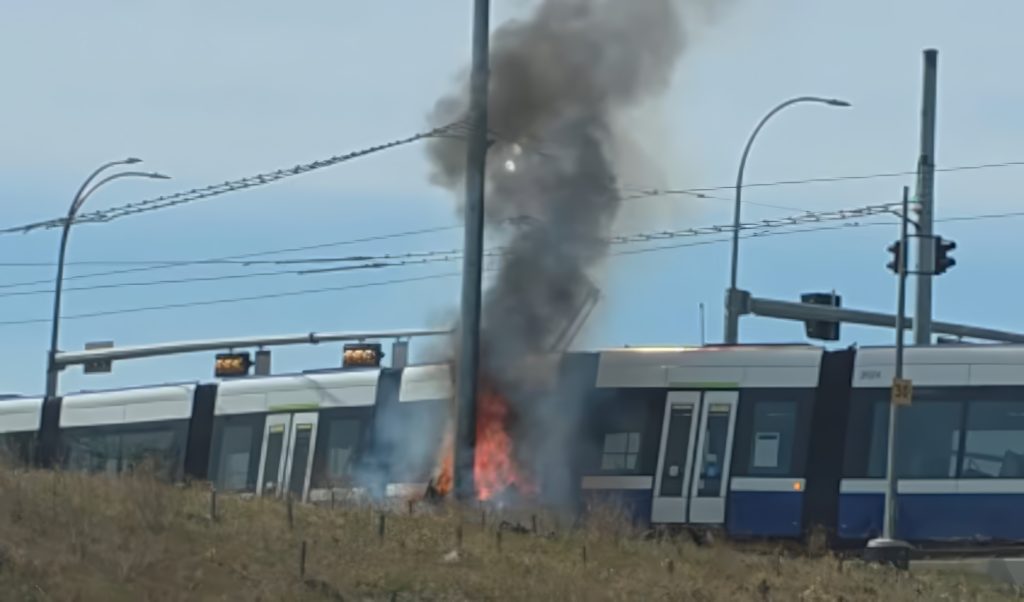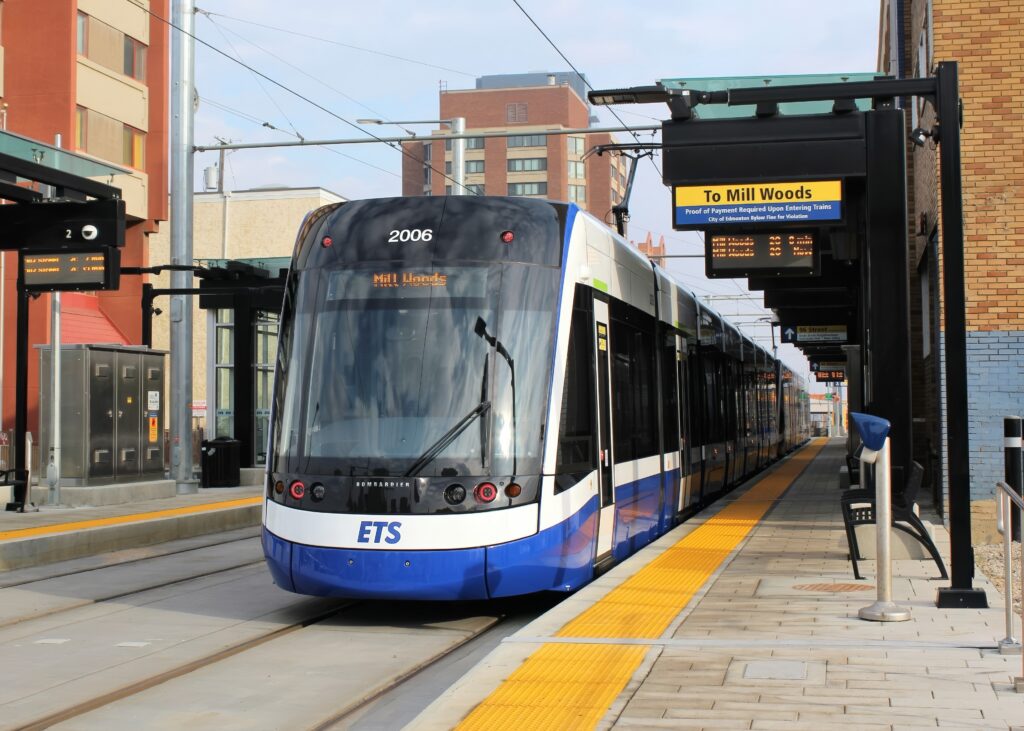
The Finch West LRT (Line 6) is the first of two new LRT lines to open in Toronto. Both are holdovers from the 2000s-era “Transit City” plan, which sold LRTs on a promise that they would be built with less time and money—and both are famously late and over budget.
While the new ground-level trains will carry more people than existing buses when it opens on December 7th, some believe that they will not be faster than the buses. Local transit experts are already raising the alarm bells:
Went up to Finch Avenue and I think there’s a pretty good chance that the new light rail is actually slower than the buses
— Reece Martin (@RM_Transit) October 30, 2025
The Toronto Transit Commission (TTC), which will operate the Finch West LRT line, recently published detailed schedule data—which was captured by local transit activists—that reveals a planned end-to-end trip time of 46 minutes.
When this is compared against the existing 36 Finch West bus (specifically, the “36C” branch running the LRT route), it would appear at first glance that the LRT does reduce travel times by approximately seven and a half minutes, during the most congested time of day when the bus has the longest scheduled running time (P.M. peak hours). However, these current-day bus running times do not tell the whole story, as they appear to retain extra time that was added to compensate for road delays during LRT construction…
When we compare the published bus run times from before LRT construction began and before the COVID-19 pandemic, the brand new Finch West LRT no longer presents any meaningful travel time savings, despite running in dedicated lanes.
I dug deep into TTC historical data to compare run times for the Finch West bus to Humber College, then known as the “36A” branch, and made adjustments to remove a portion of the route that runs beyond the LRT station site to a residential neighbourhood. The result is this:
UPDATE — 2025/11/28: This chart has been updated to reflect the release of detailed TTC schedule data for Line 6 Finch West
end-to-end scheduled travel times in minutes, based on TTC released data
No Data Found
After $2.5 billion spent to date, including provincial and federal funds far beyond the initial budget estimate of $1.2 billion, the Finch West LRT has a scheduled runtime that is less than 1 minute faster at the most congested time of day, compared to the bus service that it was meant to replace. And, although the LRT runtime could be more consistent than the bus due to its use of dedicated lanes, this consistency also means that the Finch West LRT is between 5 and 10 minutes slower at all other times of day—when the bus can run faster from end-to-end.
Furthermore, the LRT makes 8 fewer stops than the existing 36C bus service, which is now “temporary” and set to be eliminated when Line 6 opens. With the lack of any local bus services paralleling the line, riders who used these stops will now face a double whammy: they will have to walk further to access a train stop, only to potentially end up riding on a train that is slower than the bus.
This completely defeats the point of investing billions of dollars in rail rapid transit: projects like these are supposed to save people time and make transit more attractive in order to take cars off the road. That won’t happen if transit travel times increase at most times of the day.
Metrolinx (the regional agency responsible for building, but not operating the line) previously promised travel times of 38 minutes for the Finch West LRT, as noted in their FAQ document for the line. For whatever reason, they’ve missed the mark by over 10 minutes.
The Ontario provincial government previously cited an even lower travel time estimate of 34 minutes.
After asking around, various contacts in Toronto have told me that three unexpected issues are slowing down the Finch West LRT:
The first is that the sharp curve on the underground approach to the Humber College terminus, followed immediately by track switches, forces the trains there to run very slowly. However, I personally think this cannot be said to be unexpected—after all, this is part of the line geometry and layout that was planned for! Furthermore, the grade separation in this segment reduced the number of at-grade arterial road crossings from 10 to 9, which should theoretically save time and make the LRT rides more predictable. So in my view, this doesn’t count.
The second is that the line will purportedly be subject to the TTC’s operating practice for existing streetcar lines, which is to slow trains to 25 km/h over major intersections (at least 9 of them!). However, I cannot find any verifiable proof of this.
The third, and most believable issue, is that the traffic signal priority system has failed to deliver the level of priority needed for the LRT to meet its expected trip times. I’ve heard extensively about how the signal priority for Toronto’s LRTs—both this line and the Line 5 Eglinton Crosstown—are designed to extend green lights if trains are behind schedule, but do not provide absolute priority to run trains as fast as possible.
Trains with hundreds of riders shouldn't get stuck waiting at red lights for a few left-turning drivers. Transit Signal Priority is just common sense!
— TTCriders (@ttcriders) August 16, 2025
When the $2 billion-dollar Finch West LRT opens, transit riders should get priority over a few single-occupancy cars 1/2 pic.twitter.com/7wAy2QUZvR
It is entirely possible that this changes in the future, and runtimes improve as a result; however, this could also be an indicator that the concept of trains speeding through automatic green lights at all intersections has been a major over-promise.
Seattle, for example, has also found that traffic signal priority on its street-running LRT sections is less effective than expected. The result is that actual end-to-end trip times on its light rail system are higher than had been planned for, which will affect future service on expansion lines, making the trains run less frequently and with less capacity than promised.
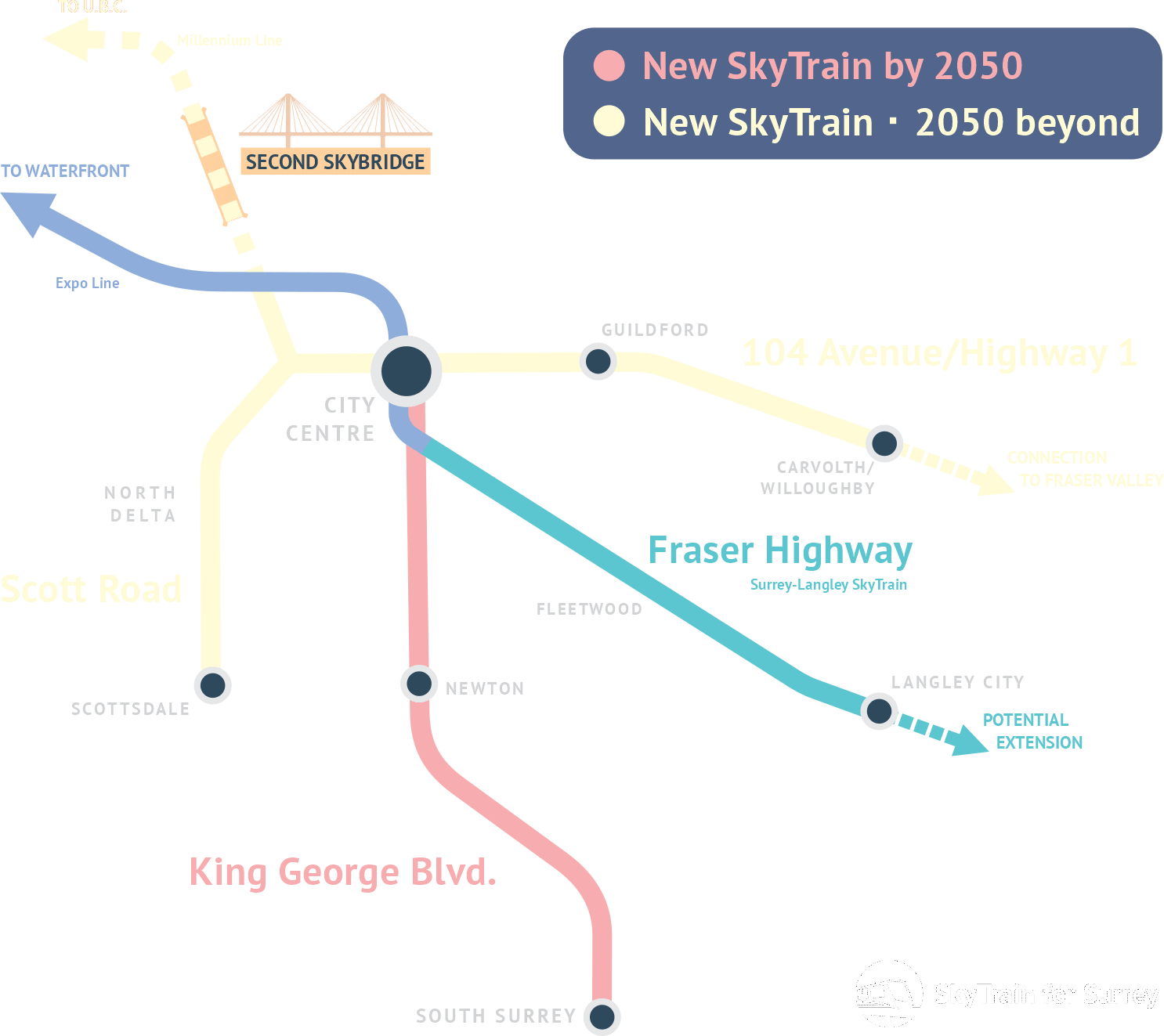
The Finch West LRT and the now-cancelled Surrey-Newton-Guildford LRT line had numerous similarities in design. They shared the aspect of being predominantly located at-grade in street medians, and were both designed to link up their riders with another higher-order rapid transit line (the Line 1 Subway and the Expo Line SkyTrain, respectively).
They were also almost exactly the same length (11 kilometres long), although Finch West has a higher density of stops (18 versus 11, making it closer to a streetcar than rapid transit LRT, with an average of 1 stop every 600 metres).
Recall that the expected travel time on the SNG LRT was to have been 27 minutes. Given the issues with actual travel times on Finch West failing to meet the planning estimates, we now wonder if 27 estimates was ever a realistic travel time estimate for the cancelled SNG LRT project.

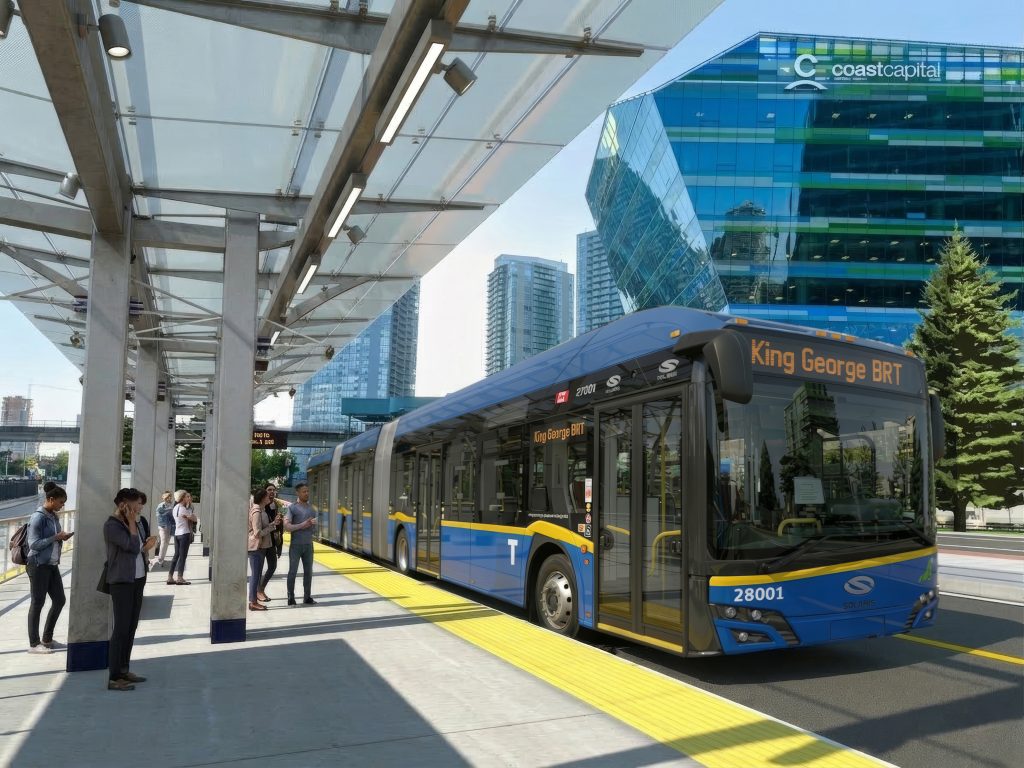
The cancellation of the SNG LRT paved the way for the now ongoing construction of the Surrey-Langley SkyTrain extension. However, some local politicians believe that ground-level light rail transit designed similarly to the Finch West LRT should make a comeback here in Surrey.
The fact is that the $2.5 billion Finch West LRT has failed to improve transit travel times. It is a mega mistake that must not be repeated anywhere else in this country—and especially not here in Surrey, BC.
Reality Check
Reality Check is the online blog run by the founder of SkyTrain for Surrey, a BC-based community organization that has advocated for the expansion of the Vancouer SkyTrain system, including our successful advocacy for the under-construction Surrey-Langley SkyTrain extension.
Media Contact: Daryl Dela Cruz – Founder, SkyTrain for Surrey ・ Phone: +1 604 329 3529, [email protected]
We use cookies to improve your experience on our site. By using our site, you consent to cookies.
Manage your cookie preferences below:
Essential cookies enable basic functions and are necessary for the proper function of the website.
Statistics cookies collect information anonymously. This information helps us understand how visitors use our website.
Google Analytics is a powerful tool that tracks and analyzes website traffic for informed marketing decisions.
Service URL: policies.google.com (opens in a new window)
You can find more information in our Cookie Policy and .