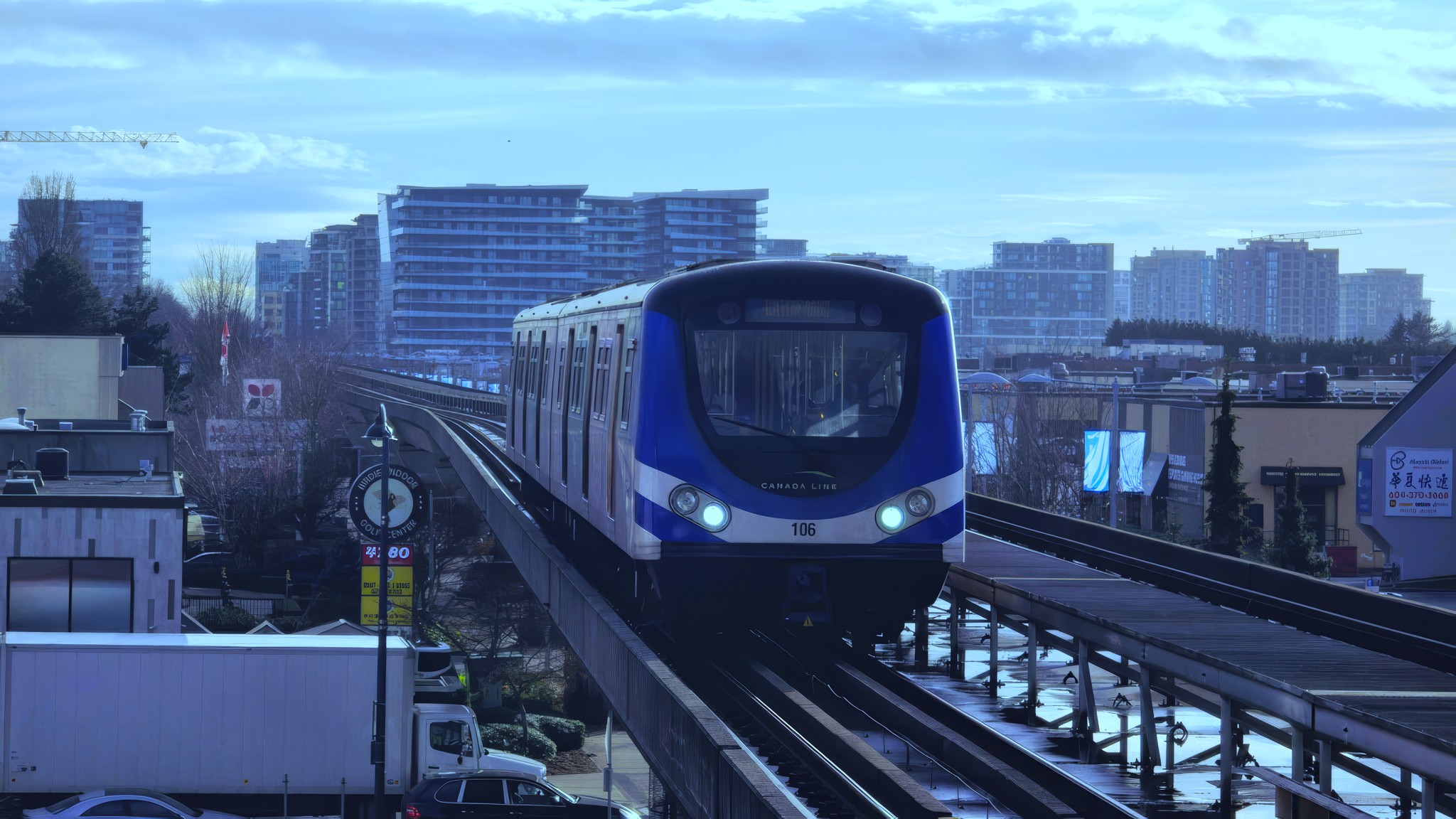
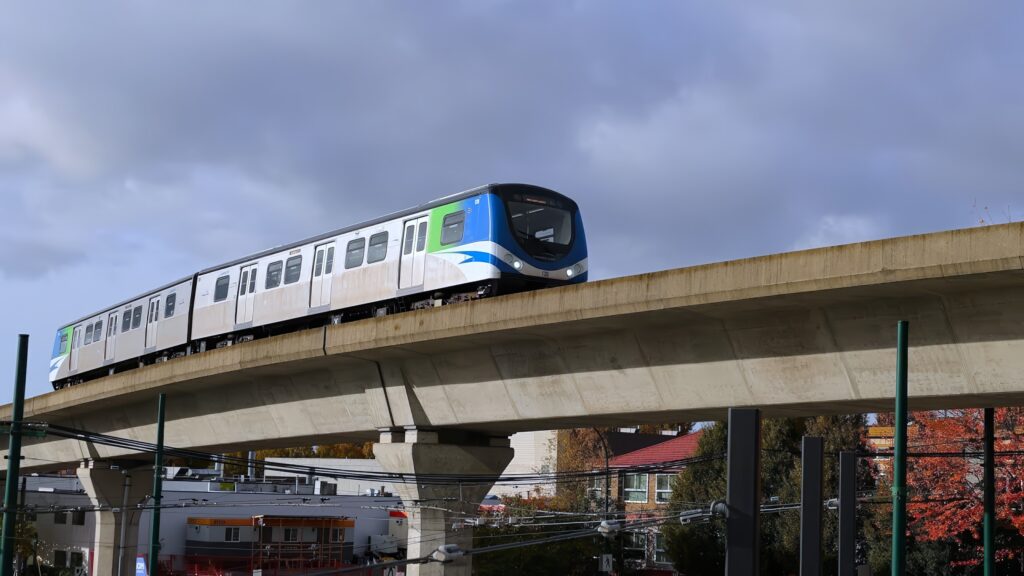
How Fast Can SkyTrain to Newton Be Built? Lessons from Three Past SkyTrain Projects
- Reality Check
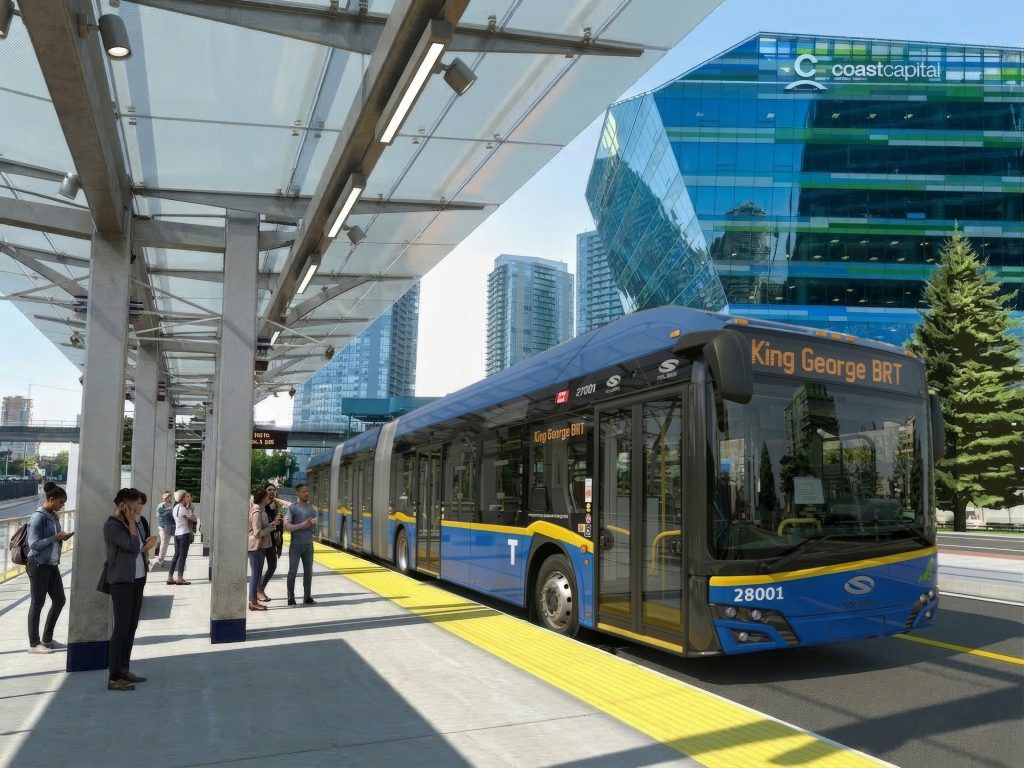
Since the provincial Conservative government announced its intention to extend SkyTrain from Surrey City Centre to Newton, a familiar narrative has emerged. According to some commentators, a SkyTrain extension to Newton is something Surrey residents should not expect to see for ten years, fifteen years, or perhaps ever. Some have used this uncertainty over project funding and timelines to revive calls for bus rapid transit (BRT) or even surface light rail transit (LRT) instead.
The most relevant comparison may be the one that is currently under construction.
Before the COVID-19 pandemic, the Surrey Langley SkyTrain was actually on track to be completed and opened by late 2025.
While subsequent events—including pandemic-related pressures and inflation in the construction sector—affected delivery timelines, the original plan remains a useful illustration of how rapidly a SkyTrain project can move when funding, governance, and political support are aligned.
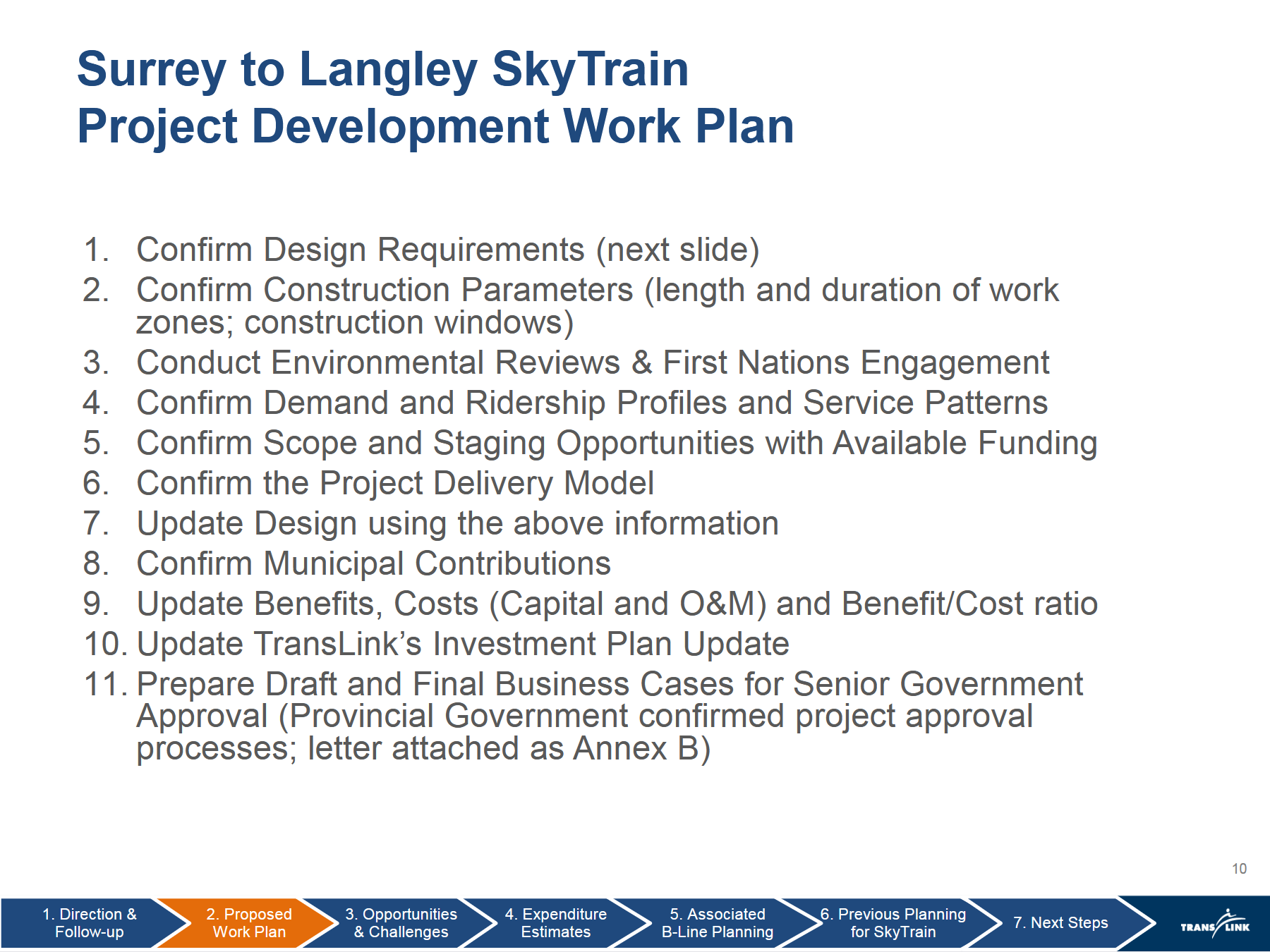
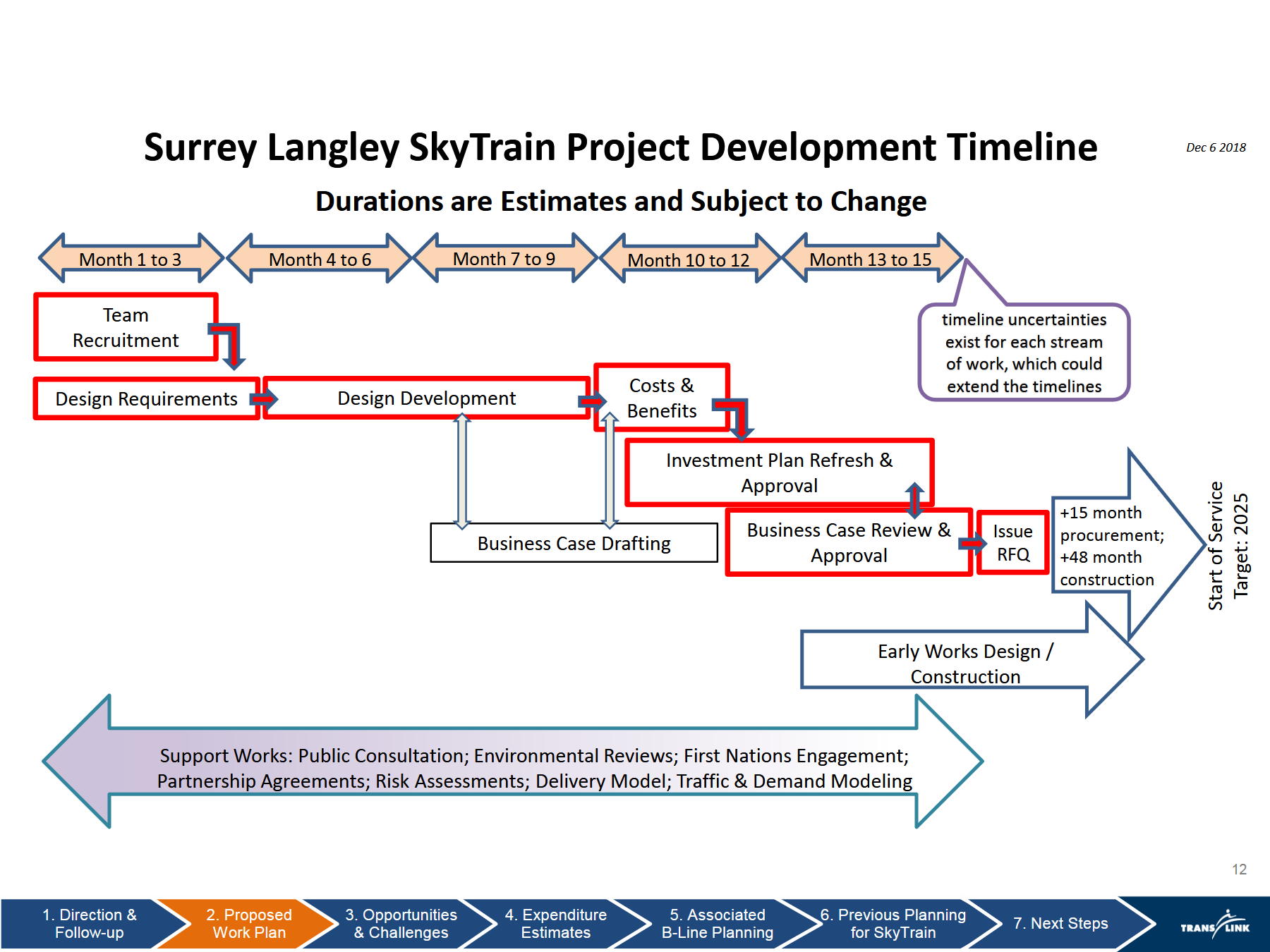
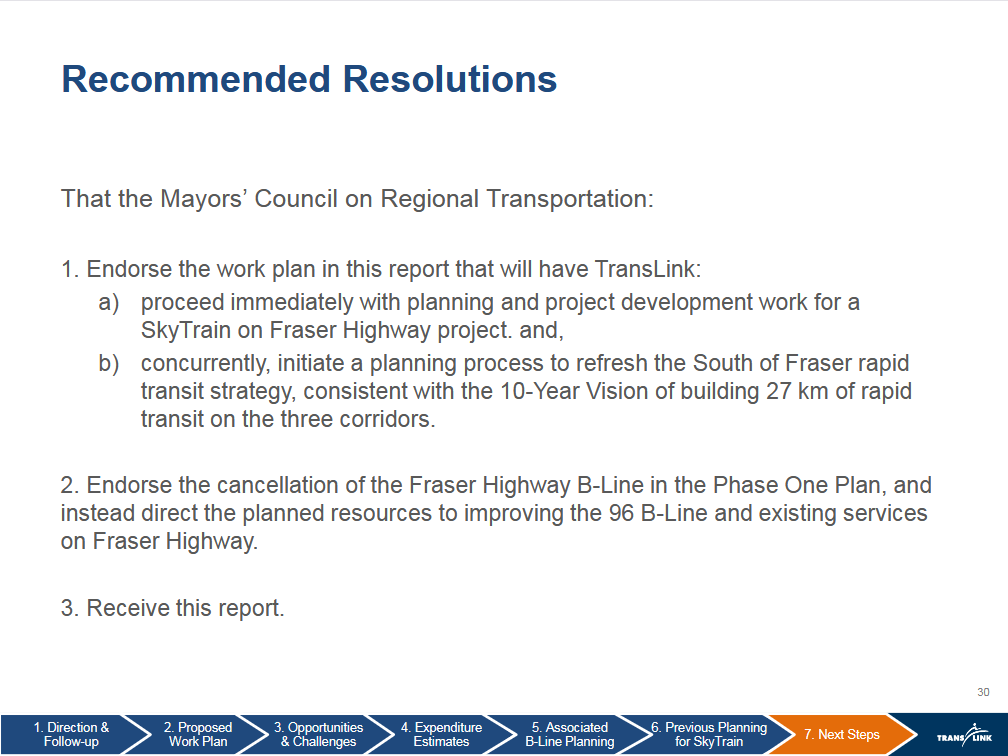
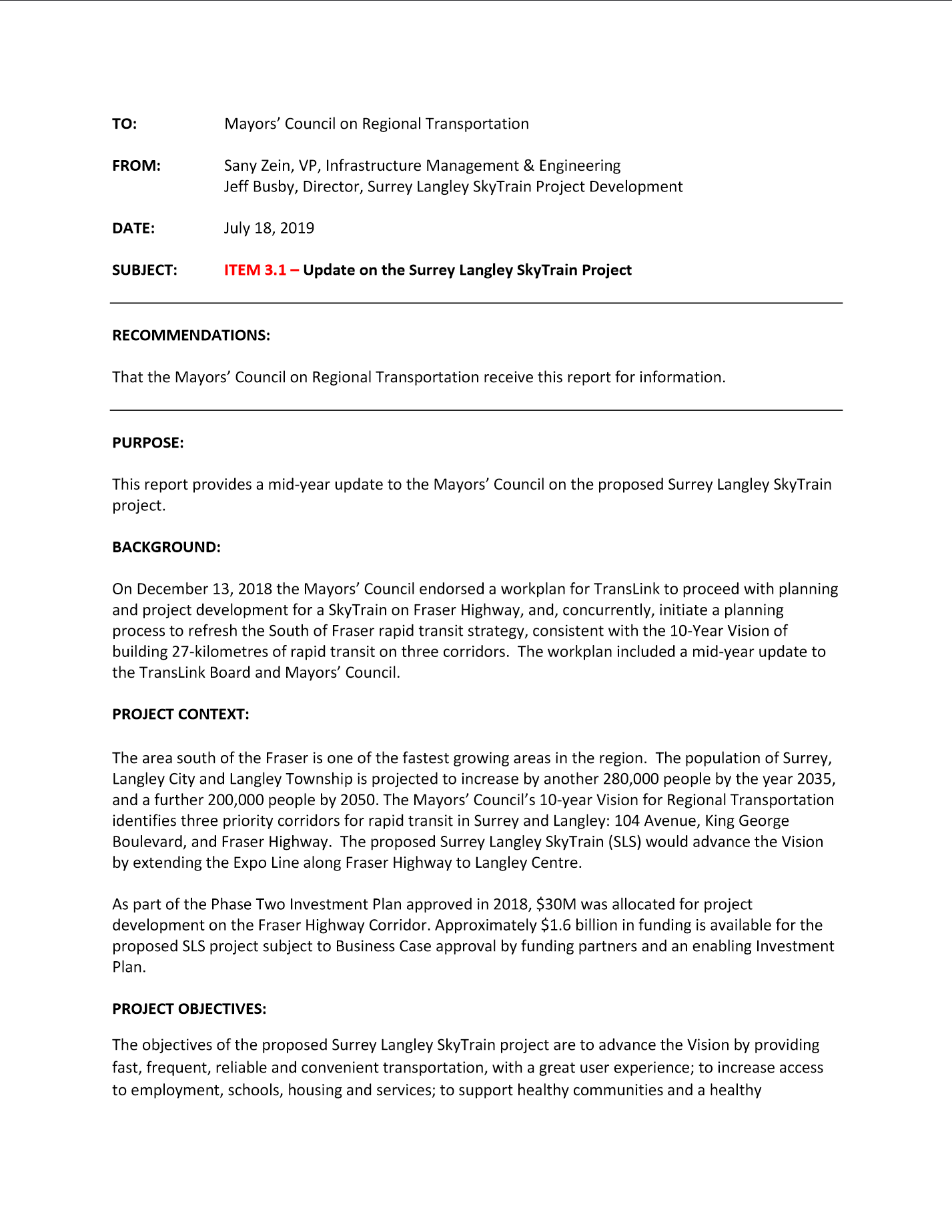
In December 2018, before the Regional Mayors Council voted to endorse and proceed immediately with developing the Surrey Langley SkyTrain (on the heels of the City of Surrey’s cancelling of the Surrey-Newton-Guildford LRT), TransLink staff laid out a detailed project and development work plan to inform Mayors on the implications of their vote.[1]
Here, TransLink staff were exceptionally clear: project development and business case work would take 15 months, after which construction would then take place over the next 48 months.
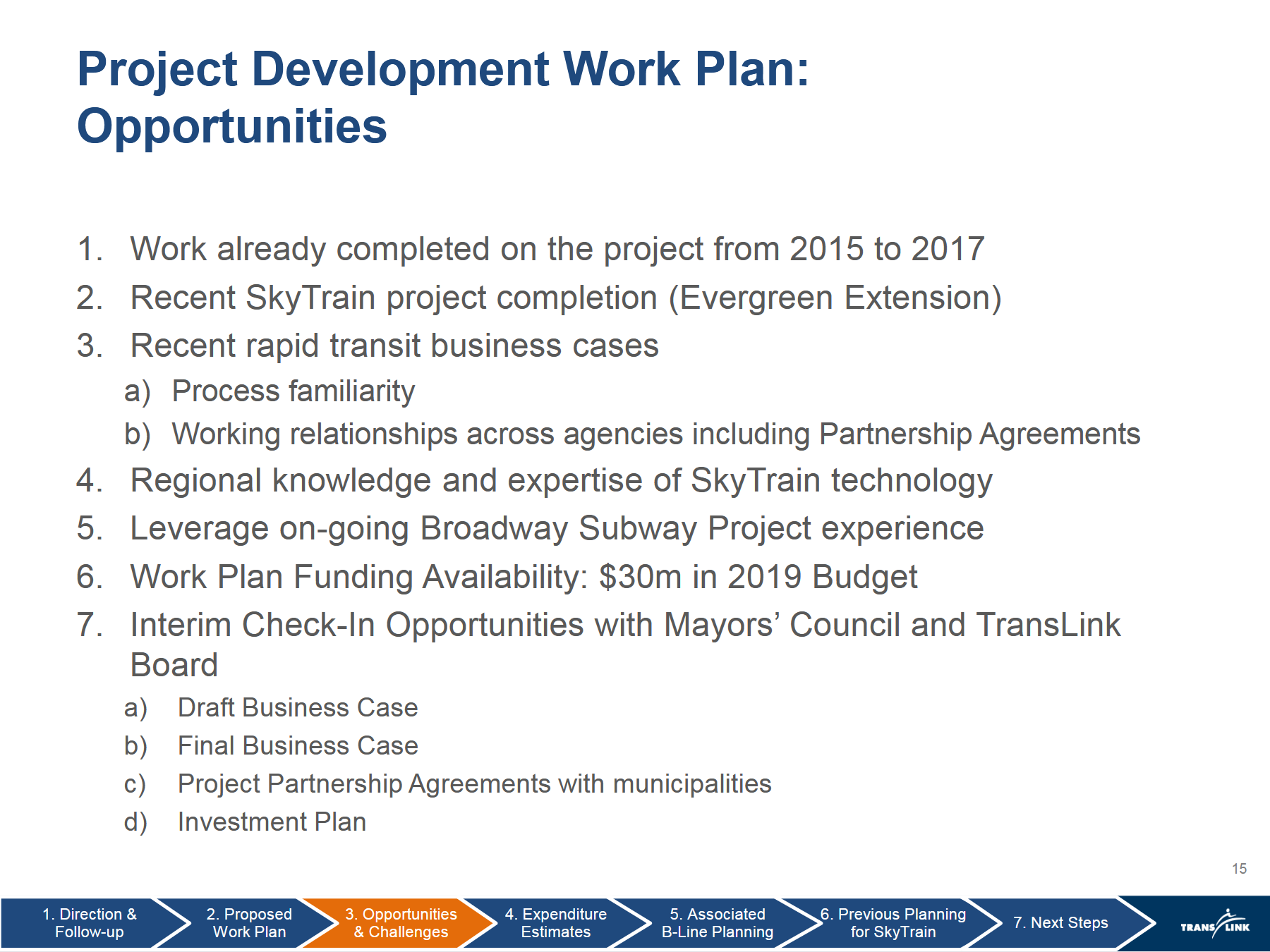
TransLink also noted that project planners would be able to rely on a limited amount of previous work assessing the potential cost and alignment of the SkyTrain alternative on Fraser Highway (“from 2015 to 2017”), experience from having recently completed the Evergreen SkyTrain Extension, and other process familiarity from past planning. Similar precedence exists today for the Newton SkyTrain extension.
Sure enough, under TransLink’s leadership, project work proceeded largely on schedule.
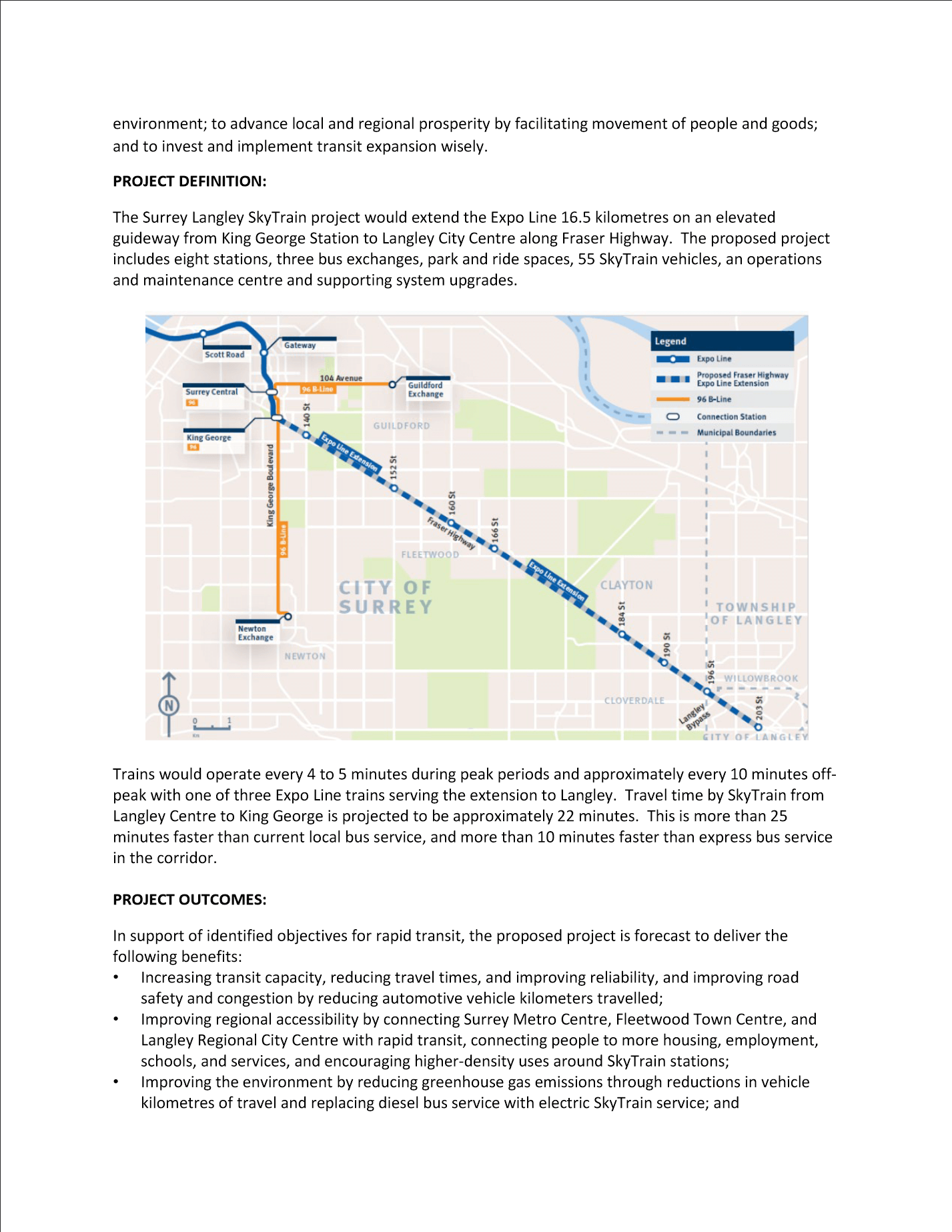
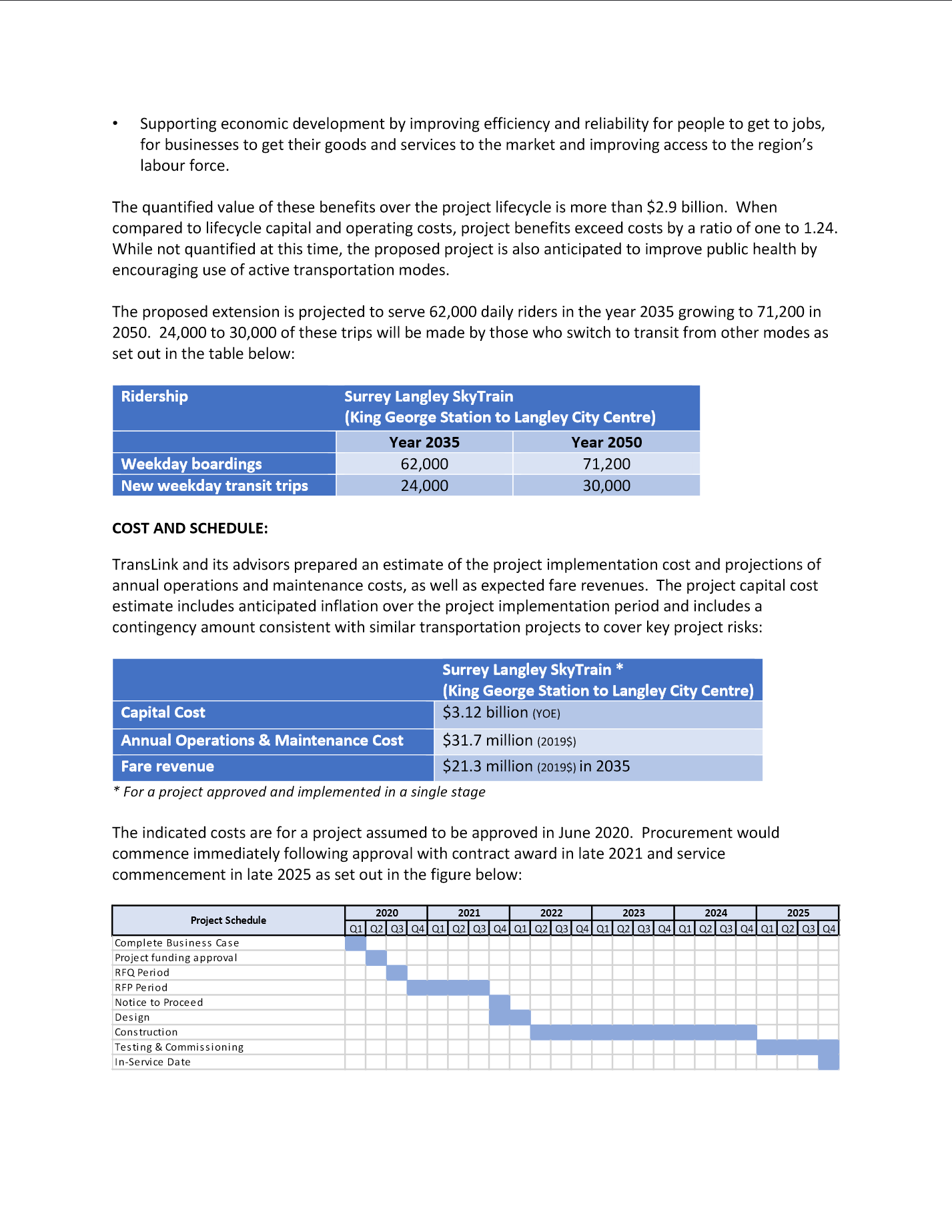
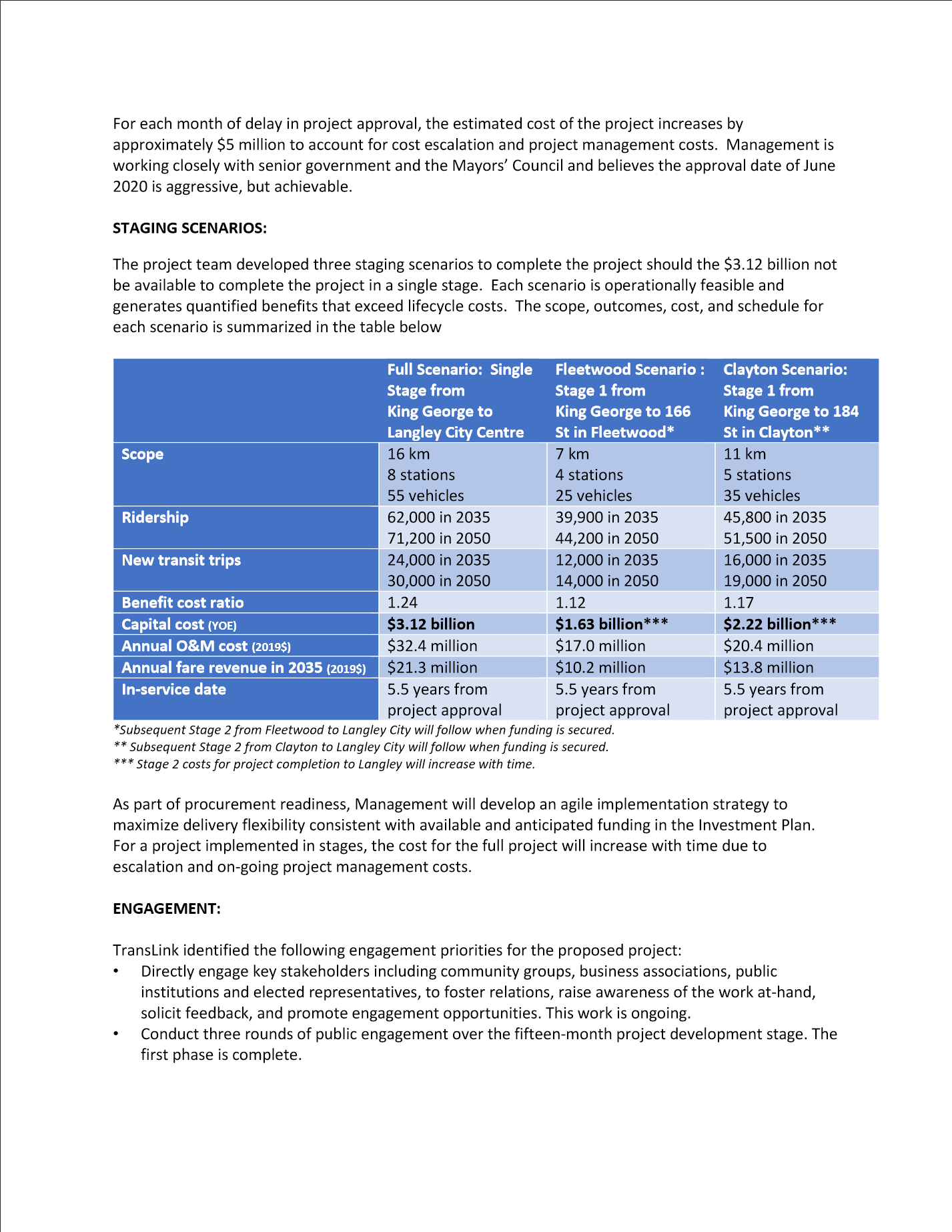
A second update in July 2019 confirmed adherence to the project schedule, while also making an appeal to support development of the SkyTrain as a single project (rather than as two phases) since the construction timeline for all 16 kilometres would be the same as the first 6 kilometres.[2]
Once again, specific quarterly periods for each project stage were identified. Construction, testing and commissioning would take place over 15 quarterly periods, starting in Q2 2022 and ending in Q4 2025.
A preliminary business case summary was then available by January 2020, in line with the previous projections that this would be made available at exactly this time. The business case affirmed the Surrey Langley SkyTrain project’s positive benefit-cost ratio of 1.24, while also confirming a project service date in late 2025, based on a complete project approval in summer 2020.[3]
In March 2020 (potentially only weeks away from a funding announcement), the COVID-19 pandemic struck.
By May of 2020, TransLink had cancelled a series of region-wide transit improvements known as the “Phase 2 Plan”, and were discussing how and whether the Surrey Langley SkyTrain could still proceed. In the end, the 2020 provincial election, which came with John Horgan’s promise to build all 16 kilometres of the Surrey Langley SkyTrain in a single phase, helped the project move along. The project was subsequently fully funded with a federal gov announcement in July 2021.
An updated business case analysis in 2022 noted that the planned construction testing and commissioning timeframe had been extended from 15 to 20 quarterly periods (now taking place from Q4 2023 to Q3 2028), likely as a result of changes to labour conditions and requirements, and pandemic-related changes to materials and equipment costs and requirements.[4]
The project that ultimately became the Millennium Line emerged from planning work that began in early 1998. Then known as the “Broadway-Lougheed Rapid Transit corridor”, decision-makers at the time were examining at-grade light rail transit (LRT) options that differed substantially from the final Millennium Line SkyTrain project.
Over the course of approximately a year, the project team evaluated alternatives and conducted public surveys, before settling on a SkyTrain-based solution which was announced in June 1998 as part of a deal that would see Bombardier (a rolling stock manufacturer) build new manufacturing facilities in British Columbia, which would later manufacture the Mark II SkyTrain cars.[5]
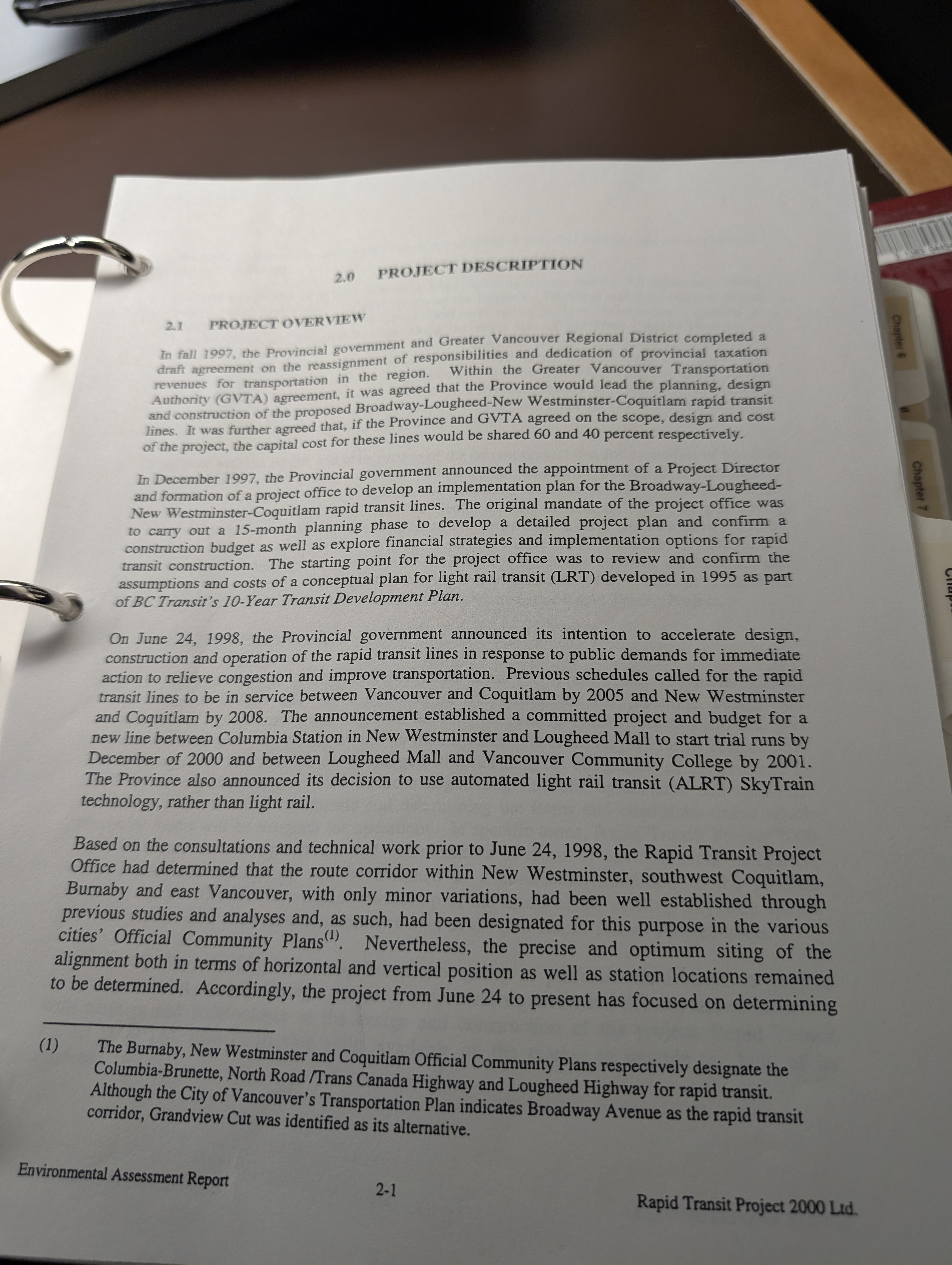
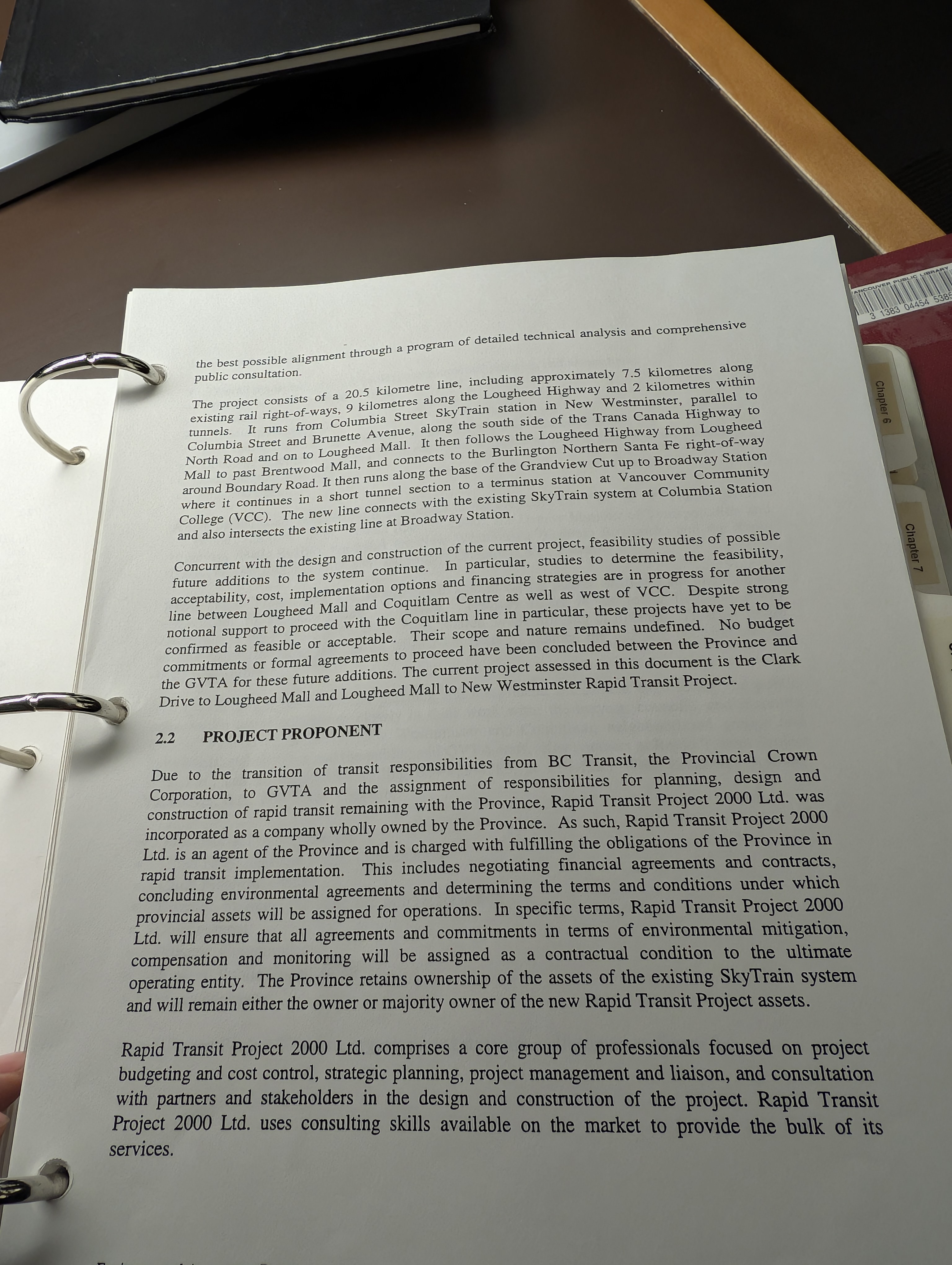
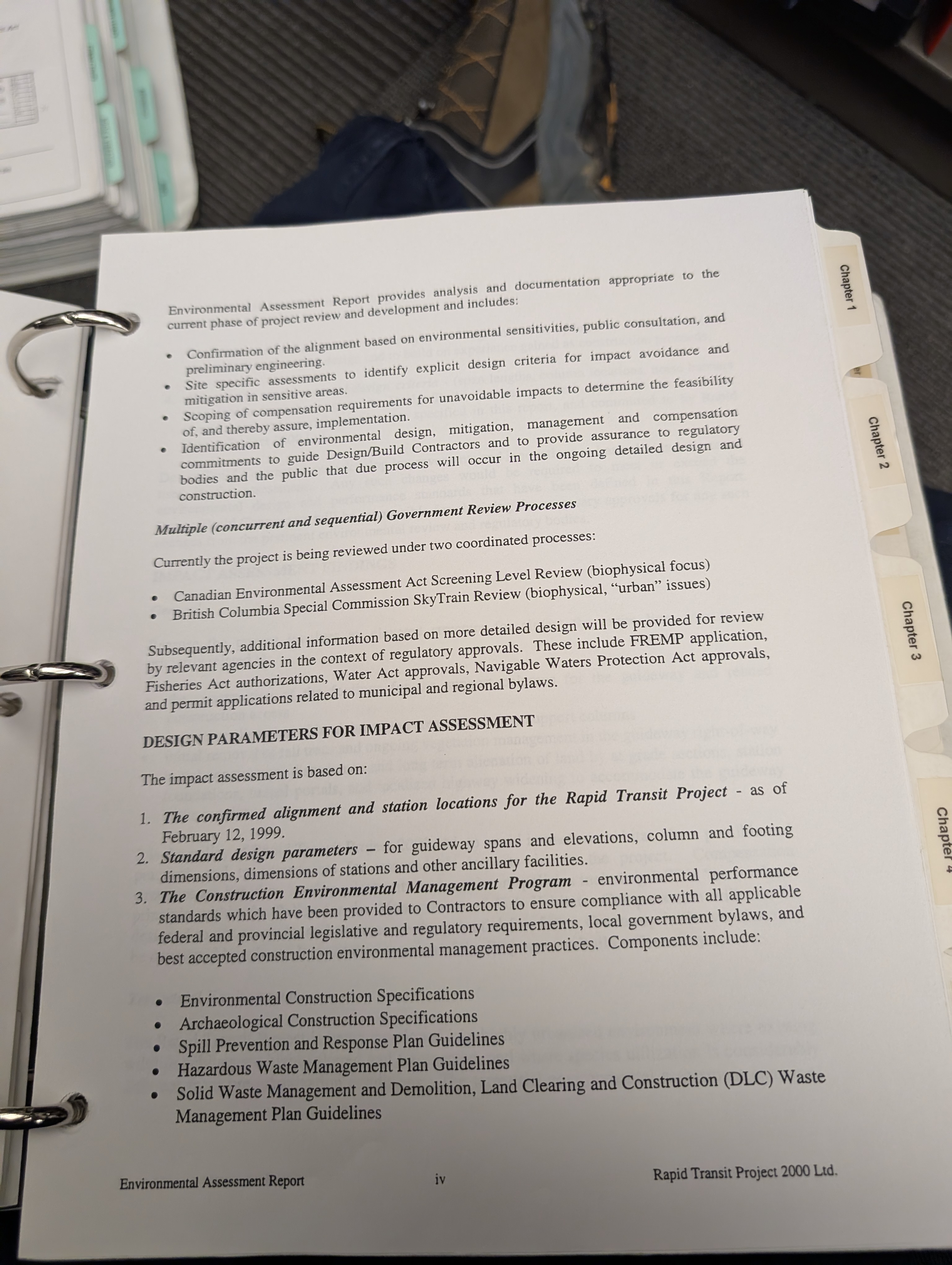
Because of the switch in technologies from LRT to SkyTrain (necessitating changes such as planning for full grade separation), work on the project essentially had to start from scratch, starting in June 1998. However, historical documents we examined in-person at the Vancouver Central Library showed that work had proceeded swiftly, as the project alignment had largely been finalized by February 1999. An environmental assessment report was then completed the following month in Mach 1999, and an additional “Special Commission” SkyTrain extension review had been completed by May 1999.[6]
In essence, the Millennium Line as a SkyTrain project went from having no dedicated design and development work being done at all… to being essentially shovel-ready in the period of less than a year.
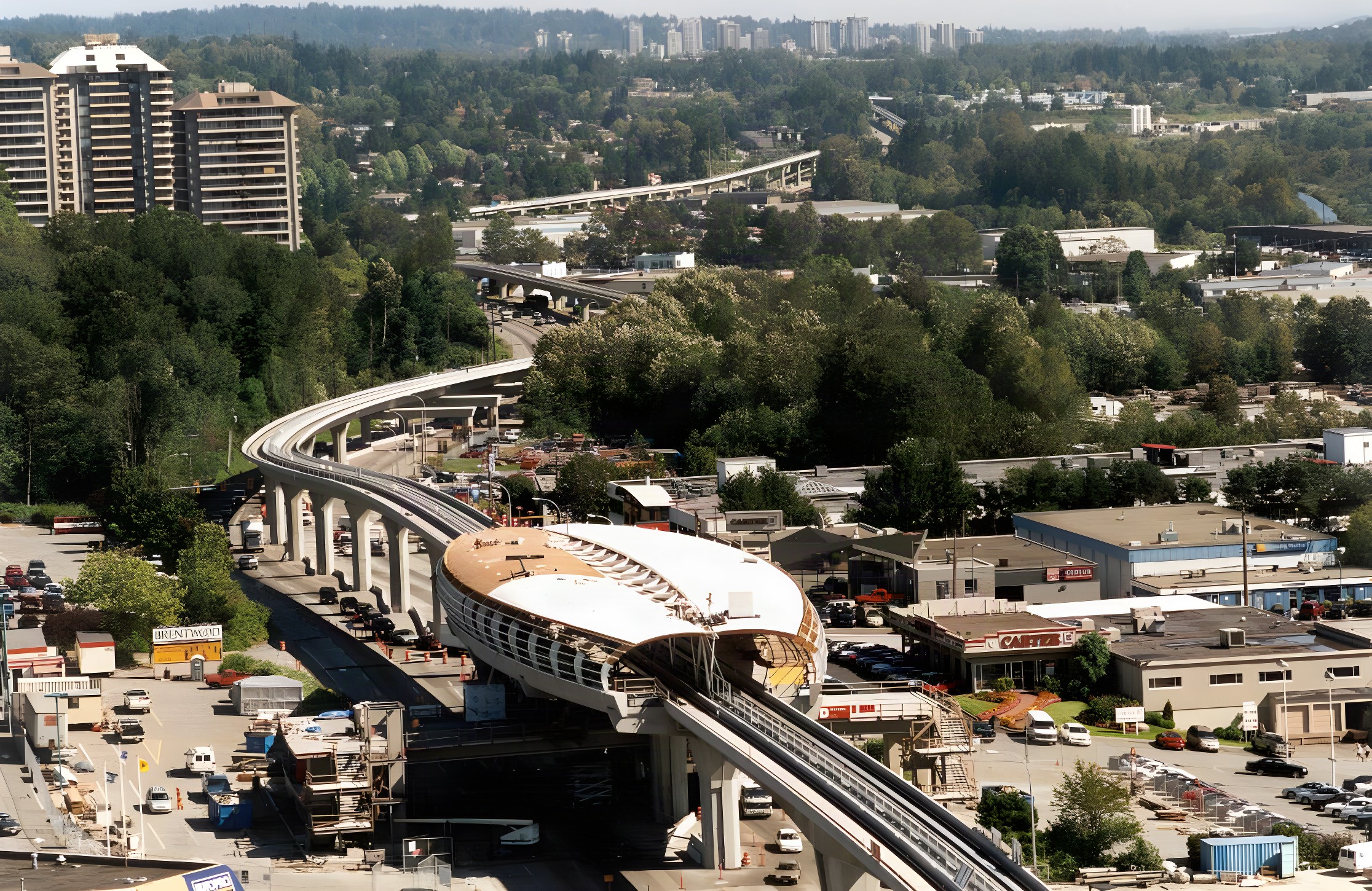
Construction activity followed shortly thereafter in October 1999[7].

After just under 3 years of construction, the first 19 kilometres of the Millennium Line entered service from Columbia to Commercial Drive Stations in August 1999. An initial 3.5 kilometres from Columbia to Braid had opened even earlier than that, in January 1999.
The Canada Line’s project complexity at construction-time should not be understated. It would be Metro Vancouver’s first majority-tunnelled rapid transit project, using a conventional train system that had not been used before in our region (necessitating that the line also have its own operations, maintenance and control centre), and with significant project risks due to the chosen alignments in Vancouver and Richmond.
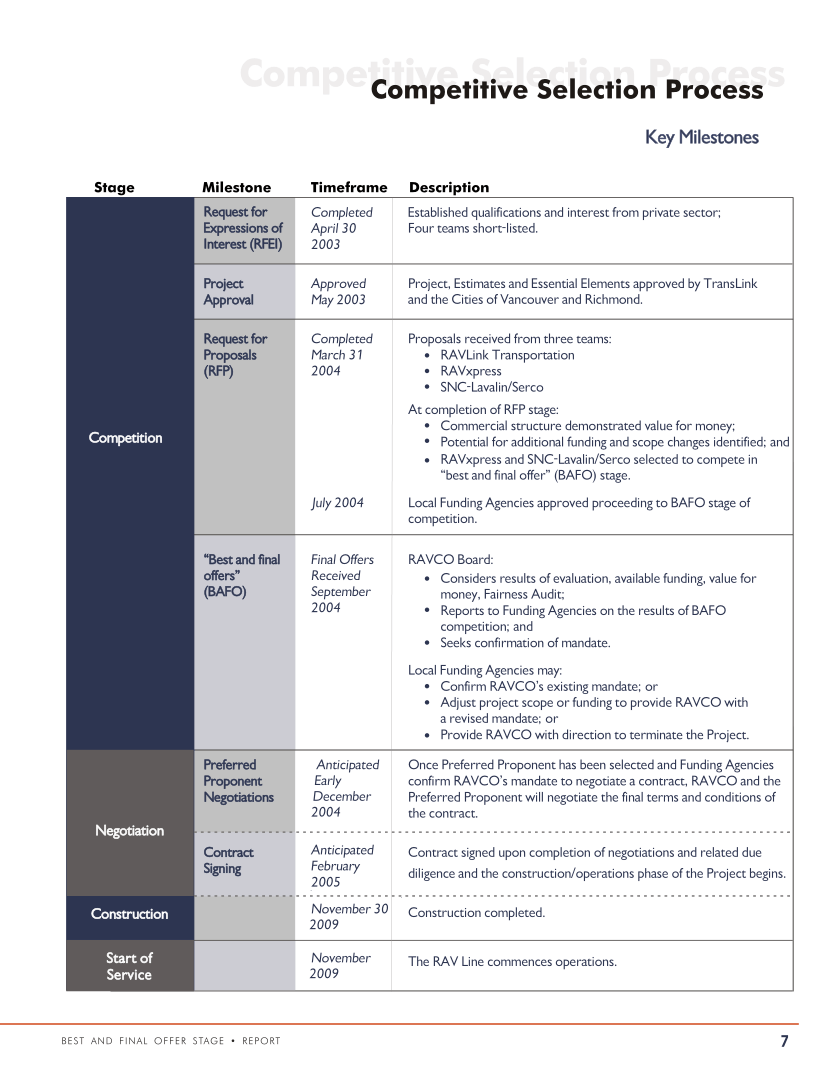
Despite this, its planning, development and completion were also done on a highly accelerated timeline—which formally started in April 2003 with an RFEI (Request for Expressions of Interest), and concluded in August 2009 with the line’s opening.[8]
The Canada Line (then known as the Richmond-Airport-Vancouver or “RAV” rapid transit project) had actually been announced by Minister Joy Macphail in the same June 1998 provincial announcement to build the Millennium Line as a SkyTrain[9]. However, its completion deadline was deliberately moved forward to 2010—long after the Millennium Line’s completion—as the project development had been made essentially contingent on Vancouver bidding to host the 2010 Winter Olympics (a bid that was later won in 2003).
In the interim/short-term, a Bus Rapid Transit line (the 98 B-Line) would be developed and commissioned.
Prior to the RFEOI being issued by TransLink in 2003, significant project development occurred behind the scenes to confirm the line’s alignment, grade separation, and other operational details. Although this project development on the RAV line SkyTrain would continue across a multi-year period with the 98 B-Line open, it was subsequently marred by several major timeline setbacks:
In the end, the RAV project was saved by additional funding provided from the provincial government (+$65 million), TransLink (+$101 million), and the SNC-Lavalin project consortium (+$206 million) to cover the amounts exceeding the $1.35 billion limit[12]. Much of the discussion and negotiation to find this funding was handled by someone who should be very familiar to our Surrey readers—Doug McCallum (who was the chairman of the TransLink Board at the time, in addition to being the Mayor of Surrey previously at that time).[13]

With the project development completed in early 2005, the project contractors were then tasked with building and opening the Canada Line on an accelerated timeline despite the earlier setbacks, to meet a strict deadline of opening on time for the 2010 Winter Olympics.
After approximately 4-and-a-half years of construction on 19 kilometres of elevated, surface and tunnel segments, the Canada Line opened on August 17, 2009—three and a half months ahead of the planned November opening, and with plenty of time to spare for the Olympics.
Pictured in header: Surrey Langley SkyTrain construction and gantry at Fleetwood Station (156 Street)
Reality Check
Reality Check is the online blog run by the founder of SkyTrain for Surrey, a BC-based community organization that has advocated for expanding the Vancouver SkyTrain system, including our successful advocacy for the under-construction Surrey-Langley SkyTrain extension and the proposed SkyTrain expansion to Newton.
Media Contact: Daryl Dela Cruz – Founder, SkyTrain for Surrey ・ Phone: +1 604 329 3529, [email protected]