SkyTrain for Surrey, not LRT!

SkyTrain for Surrey debunks the 1999 anti-SkyTrain “Greer report”

We have released a new analysis of the 1999 “Review of Rapid Transit Project Claims” (a.k.a. the “Greer Report”) finding that the report’s release of misleading information resulted in significant delays in the construction of rapid transit to Coquitlam and UBC. 

This report led politicians and stakeholders to believe that the then-proposed Millennium Line SkyTrain project was “another fast ferries fiasco”. However, an overwhelming majority of the information collected and presented in the report was misleading or completely false.

Background

The 1999 “Greer report”, written by Alan Greer of Greer Consulting Services, examined a planning study completed by the Millennium Line Rapid Transit Project office (RTP) to support the Millennium Line SkyTrain, which had been moved forward by the NDP government as “Phase I” of a “T-line” project connecting Coquitlam with Vancouver, and had replaced an earlier light rail transit (LRT) proposal.

Following the election of Gordon Campbell and the B.C. Liberals in 2001 (the same year that the Millennium Line opened), the new government cancelled the planning process of the remaining “Phase II” portions of the “T-Line” – including a portion that is only today being constructed as the SkyTrain Evergreen Line, with a slated 2016 completion year. The other portion cancelled was a westward extension towards UBC.

During the election period for 2001, Gordon Campbell and the B.C. Liberals cited the Greer report in order to attack the NDP government, calling the RTP’s information “inaccurate, misleading and unsubstantiated” and labelling the Milennium Line as “another fast ferries fiasco”. The B.C. Liberals subsequently won the election, allowing them to cancel all further SkyTrain construction.

According to Greer, the “primary flaw” in the RTP’s study was that cost estimations were done only for “Phase I” (the Millennium Line), to allegedly “create the appearance of favourable costs for SkyTrain” compared to a ground-level light rail transit system; and that cost analysis for “Phase II” were neglected and put off, in order to hide the “expenses” of building out those portions with “SkyTrain technology” instead of LRT.

Our analysis points out (among other things) that the RTP’s true reason to withhold cost analysis of phase II was not the high cost of SkyTrain, but rather the high cost of a better LRT, after community stakeholders requested and mandated that there be more grade separations.

It also notes that much of Greer’s supporting information is incorrect, including the notion that SkyTrain is based on “proprietary technology” and that Bombardier has a monopoly supplier position for future rolling stock orders (this monopoly does not exist, as other manufacturers do build compatible linear motor trains — see our Dec. 2012 analysis: Putting an end to the myth that SkyTrain is proprietary).

A note from our founder, and lead analyst in our review of the "Greer Report"

"There is so much about the Greer report that is incorrect. Obviously, the material was not reviewed properly before it was recklessly used by the Liberals to attack the NDP."
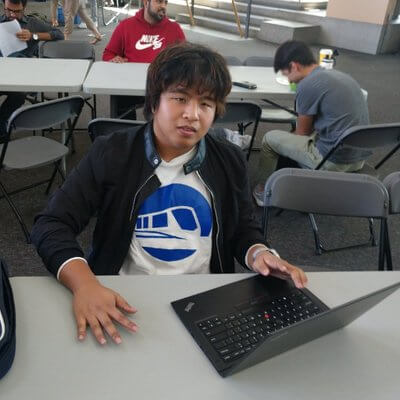
Daryl Dela Cruz
Founder and Director, SkyTrain for Surrey

When we discovered the “Greer Report” in early 2013, 12 years after its declassification as “confidential” and release to the public by the B.C. Liberals in 2001, it had already seen considerable publicity from light rail advocates.

In my analysis of the report, I found that Mr. Greer is significantly lacking in his knowledge of the SkyTrain system. For example: some assumptions completely excluded the ability to have higher operating frequencies with driverless rail systems, compared to light rail transit systems. There are a lot of unsubstantiated claims, and there are also several places where the information in the document contradicts itself.

When information is incorrect, it can disrupt the planning process of important investments that will really matter after 10 to 20 years. In this case, one man used twisted information to defraud thousands of residents by successfully delaying further SkyTrain expansion.

Never mind that Coquitlam residents would be already benefitting from high quality rapid transit, which would have been built and serving those citizens before the economic downturn of the late-2000s; but a second SkyTrain extension to Broadway and Arbutus—addressing the current Broadway transit woes that were just recently pointed out by the City of Vancouver—would probably have already been built as well.

This is the largest analysis report we have ever done by far. We are always extremely concerned with what is being used in decision-making processes, and it’s more important than ever that we address the “Greer report”, as it has already been used by light rail advocates to try and stall the expansion of SkyTrain further into Surrey and to Langley.

Read our full analysis of the Greer Report

About SkyTrain for Surrey

SkyTrain for Surrey is the community organization that advocated for the Surrey-Langley SkyTrain extension. From our beginnings as a petition calling for the scrapping of a street-level LRT proposal, we grew into a community of like-minded folk, taking on various projects such as making SkyTrain an election issue in 2018 as a registered advocacy group. SkyTrain for Surrey continues to call for high-quality transit infrastructure projects serving Surrey, Delta and the Langleys.

Media Contact:

Daryl Dela Cruz ​– Founder, SkyTrain for Surrey
Phone: +1 604 329 3529, [email protected]

SkyTrain for Surrey debunks the 1999 anti-SkyTrain “Greer report”