Menu

Overall, I believe that this exchange underscores a larger point: that transit is ultimately about how people move, and how quickly they can reach jobs and services; and this determines whether new neighbourhoods actually become the accessible communities that planners promise.
Jarrett Walker argues that accessible communities are the product of a transit network that works. A single rail line that is slow or unreliable will not automatically create the dense, transit-oriented neighbourhoods planners envision. Faster, more frequent service expands the practical job market for residents: a reliable 30-minute commute opens many more opportunities than a 45–60 minute trip. That difference matters most when jobs are scarce or housing costs push people into longer commutes.
This is why choosing the right rapid transit technology—one that delivers competitive travel times, dependable service, and sustainable operating costs—is essential for Surrey and Metro Vancouver.
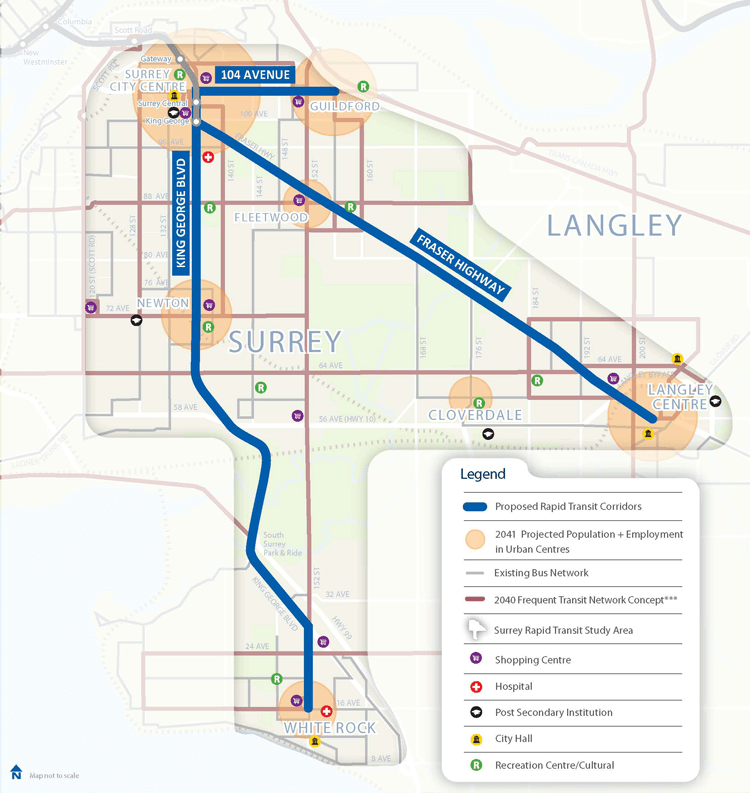
To be effective, rapid transit must deliver competitive travel times and reliability while leaving enough operating funds to strengthen the broader network—especially buses that connect people to the rapid transit lines. In Surrey, where development patterns and road geometry complicate transit delivery, these trade-offs are especially important.
Citizens expect transit that is as convenient and attractive as driving. If a chosen technology cannot help the citywide network meet that standard, then the broader goal of shifting mode share toward sustainable travel will be much harder to achieve.