Why SkyTrain does not “lack community integration”
Reality Check
Daryl DC (SfS Founder)
February 8, 2012
A troubling narrative has been gaining traction in recent discussions about rapid transit south of the Fraser—the claim that SkyTrain somehow “lacks community integration.” This idea resurfaced recently in a South Fraser Blog post by Nathan Pachal, where a decades‑old public consultation notice was used to imply that SkyTrain was never intended to support community‑oriented development.
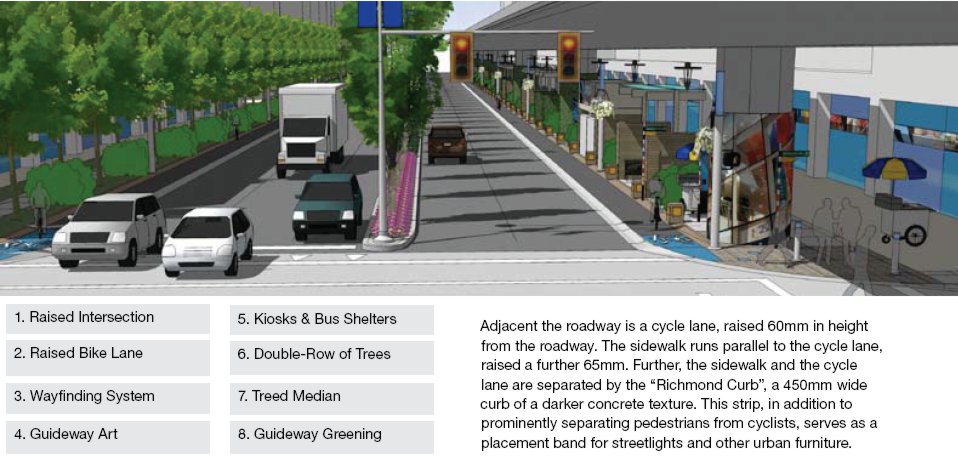
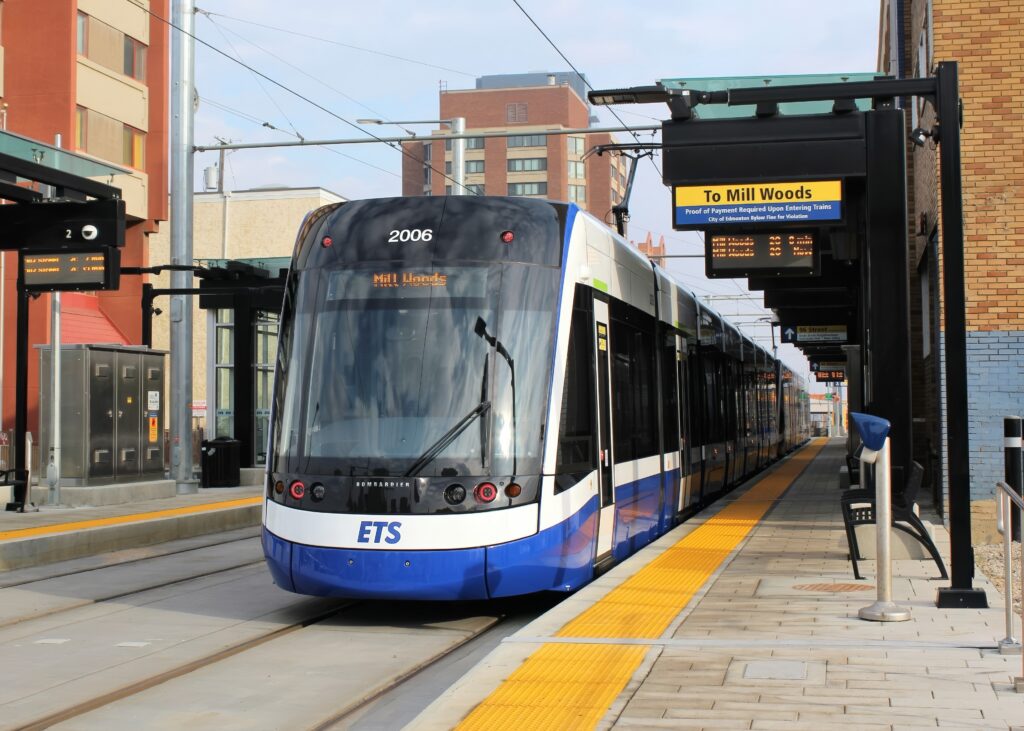
Pachal says: “It’s interesting that the picture of rapid transit is a low-floor light rail vehicle integrated into the community. This is something that our current SkyTrain system lacks.”
This interpretation is not just historically inaccurate—it actively distorts public understanding of how SkyTrain has shaped Metro Vancouver’s urban fabric for more than 35 years. And in a region where transit decisions will define the next century of growth, allowing misconceptions like this to spread unchecked is dangerous.
This misconception deserves a clear, fact‑based correction.
SkyTrain already demonstrates strong community integration
The notion that SkyTrain “cannot integrate with the surrounding community” is simply incorrect. Across Metro Vancouver, SkyTrain has been a catalyst for walkable, transit‑oriented, community‑serving development for more than three decades.
Examples are abundant:
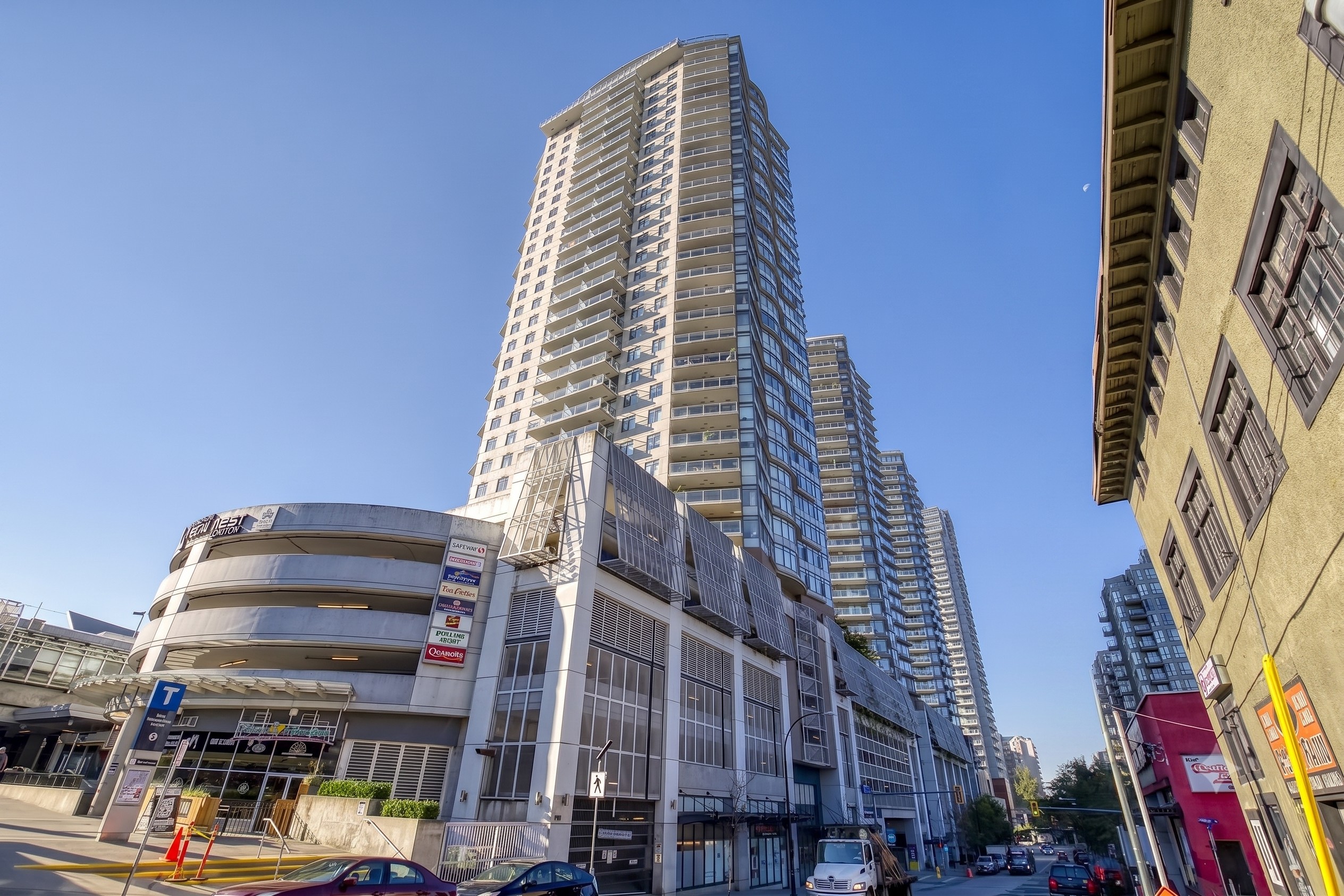
Plaza 88 in New Westminster—a fully integrated, mixed‑use urban community built directly into the existing SkyTrain station, featuring residential towers and over 200,000 square metres of retail space.
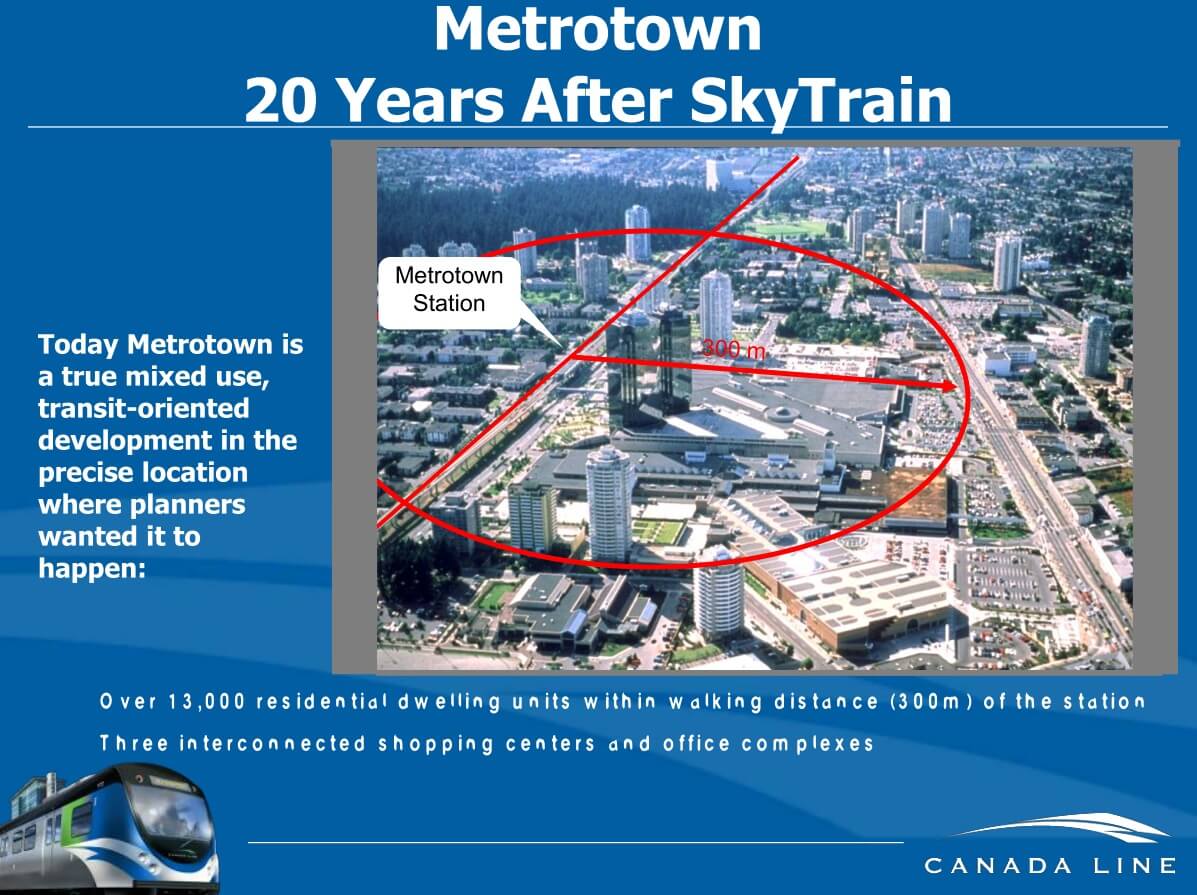
Metrotown, Lougheed Town Centre, and Richmond City Centre—all transformed into high‑density, pedestrian‑friendly hubs because SkyTrain service provided the reliability and frequency needed to support major investment.
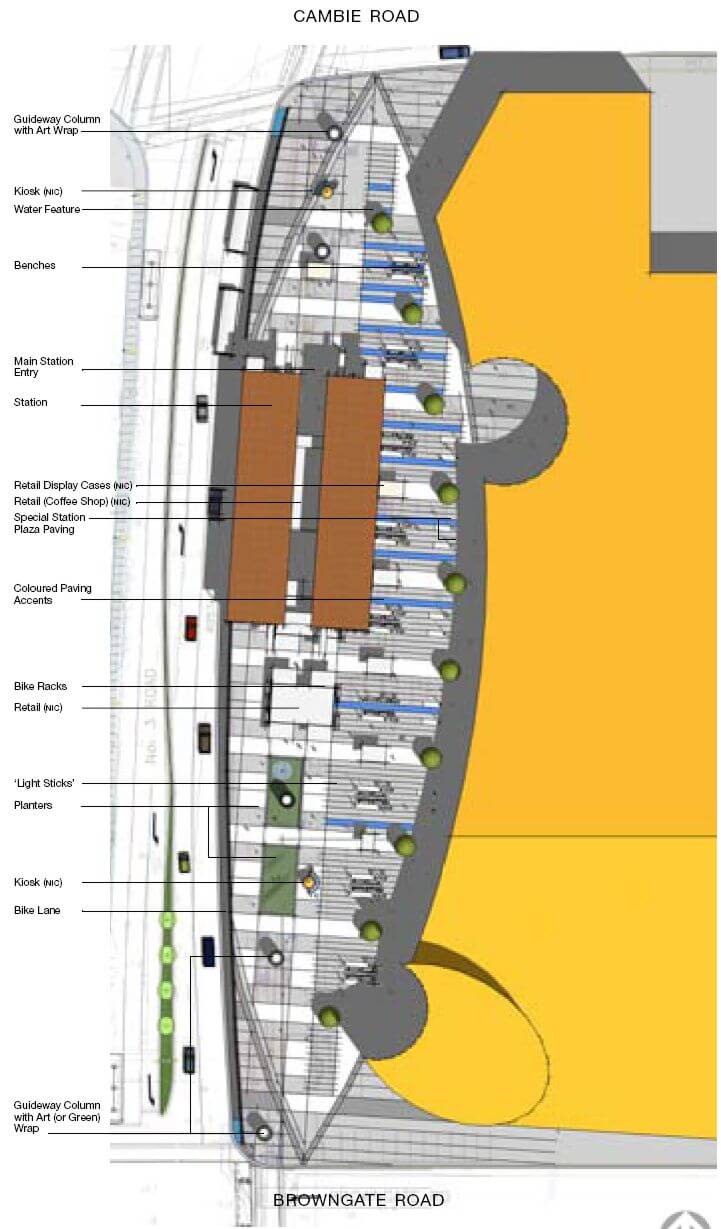
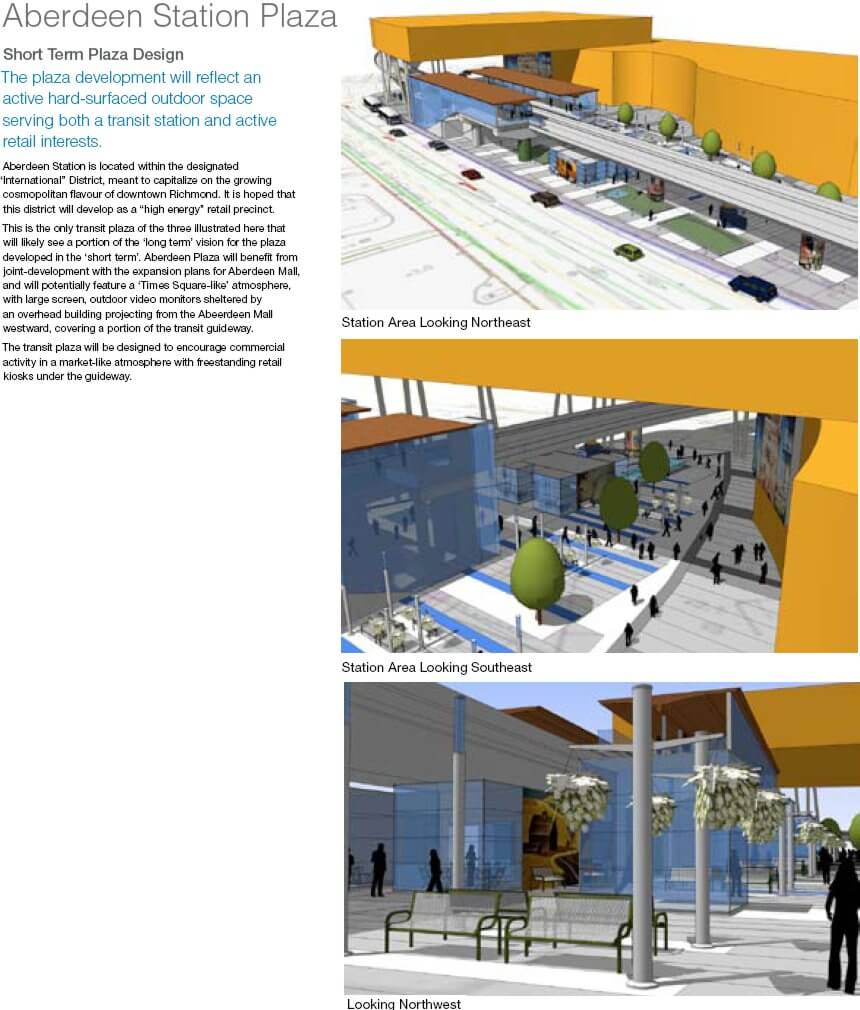
Upcoming projects such as the Aberdeen Square development at Aberdeen Station and new station‑area planning along the Evergreen Line continue this pattern of community‑building integration.
New Westminster Station developent (Plaza 88)
Concept render of New Westminster's Plaza 88 development
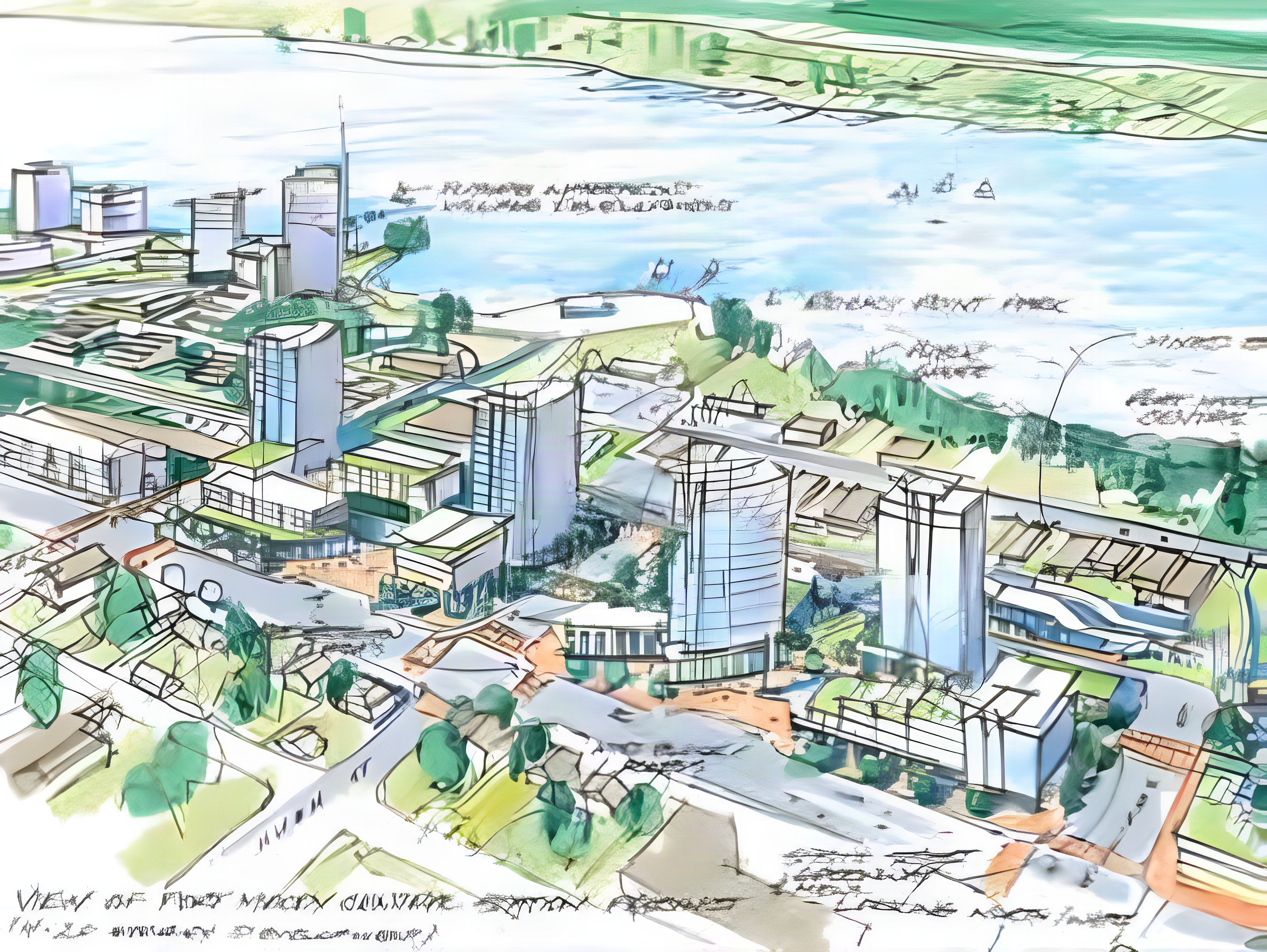
Aberdeen Station (Aberdeen Square) development concept - from planning document
Aberdeen Station (Aberdeen Square) development concept - from planning document
A completed city centre in 2006, risen from the ashes of a dull community. Metrotown is now home to one of the busiest SkyTrain stations and the largest mall in Metro Vancouver. The area is a popular gathering place for people from all over Metro Vancouver and the Fraser Valley.
SkyTrain station integrated development render - from Port Moody's OCP draft
Does LRT offer “better” community integration?
Advocates of at‑grade LRT often argue that street‑level access to rail transit inherently creates stronger community ties. But this assumption does not hold up under scrutiny.
At‑grade LRT requires wide rights‑of‑way, often placed in the middle of major streets. This introduces several challenges:
Tracks and platforms placed in the middle of the roadway create a hard separation between the station and surrounding businesses.
Longer pedestrian crossing distances and wait times reduce walkability.
Property acquisition and demolition may be required to widen corridors or offset lost road capacity.
Increased congestion, noise, and pollution on parallel routes where traffic must be redirected.
Goods movement and emergency access become more constrained, forcing further road expansions elsewhere.
These impacts can undermine the very community qualities LRT proponents claim to support. Meanwhile, SkyTrain’s elevated guideway avoids conflicts with traffic, and allows station areas to be designed intentionally to integrate with development—as was done in New Westminster.
Station Access vs. Service Quality
A recurring talking point is that “faster station access”—the ability to step directly from the sidewalk onto a platform—makes LRT more attractive to riders, and improves its “integration” into the community. However, this argument dramatically overstates the importance of access time and ignores the far more influential factors that actually determine ridership, land‑use outcomes, and long‑term transit success.
What truly drives ridership—and what therefore shapes development around stations—are the fundamentals: frequency, reliability, and speed. These are the metrics that determine whether people can depend on transit for work, school, appointments, and daily life. They are also the metrics that determine whether developers are willing to invest hundreds of millions of dollars into transit‑oriented communities.
And on every one of these critical measures, SkyTrain outperforms at‑grade LRT.
Grade‑separated rapid transit delivers high frequency without being constrained by traffic signals or congestion. It provides consistent reliability, unaffected by collisions, blocked intersections, or weather‑related road delays. It offers faster end‑to‑end travel, enabling regional connectivity that at‑grade systems simply cannot match.
These qualities matter far more than whether a platform is 30 seconds closer to the sidewalk.
A misguided narrative that needs correction
The idea that SkyTrain “lacks community integration” has persisted not because it is true, but because it is simple—and simplicity can be seductive when cities face complex choices. But Surrey’s future cannot be shaped by soundbites, nostalgia for street‑level rail, or mis-interpretations of our planning from the 1970s and 1980s. It must be shaped by evidence—and the evidence is unequivocal.
SkyTrain has already produced some of Metro Vancouver’s most successful, walkable, transit‑oriented communities. It has attracted billions in private investment, supported high‑density growth, and delivered the reliable and frequent transit service that residents depend on.
As we plan for the next generation of growth, we must be honest about what works, what doesn’t, and what kind of city we want to build. The stakes are too high to get this wrong.
Pictured in header: New Westminster Station developent (Plaza 88)
Reality Check
Reality Check is the online blog run by the founder of SkyTrain for Surrey, a BC-based community organization that has advocated for the expansion of the Vancouer SkyTrain system, including our successful advocacy for the under-construction Surrey Langley SkyTrain extension.
Media Contact: Daryl Dela Cruz – Founder, SkyTrain for Surrey ・ Phone: +1 604 329 3529, [email protected]